Adventures in Bourgogne Wine

Post by Lauren

This weekend, we traveled with S & S to Bourgogne (Burgundy) wine country. It’s only about a 2 1/2 hour drive from Geneva. Not bad. Below you can see the portion of France that is designated to be Burgundy. I make this designation of what is truly Burgundy because they certainly make sure to educate you that their wines are the most special viticulture region of France, above Champagne and Bordeaux. We had an excellent guide, Jean Michel, who used to be the director of the travel board of Burgundy. In this role, he traveled all over the world educating on Burgundy wines. And after a day with him, we all felt a bit smarter on wine.

Takeaway #1 – Burgundy wines are special because of the geology. The Cote d’Or used to be an actual coast many years ago. When the Alps formed, it rifted the layers of limestone, thus creating different steps of limestone based soil. It was the Cistercian monks In the 11th Century who actually discovered that the different plots produced different tasting wines. It is because of this that they have the four designations today: regional, village level, village premier cru and village grand cru. They can be literally intermingled.
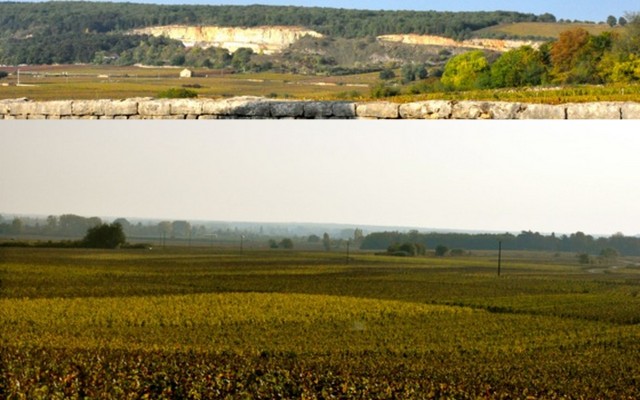
Notice the gradients in the limestone in the top picture and how the different soils make different color leaves, resulting in a "patchwork" effect.
This land is only a cool 6 million for 2.3 acres. What a deal! But this price and scarcity of sale prevents people from buying large plots at once. It isn’t unusually for an owner to only have 3-4 rows of vines in one place, and then own another few rows elsewhere. This also keeps production small and focused on quality.

Why were monks making wine, you might ask? Well in this day and age, they dedicated one-third of their time to prayer, one-third to education/study, and one-third to labor. Their labor was on the land they were given, the vineyards, and they used their production for gifts and for trade.

Scenes from the monastery, Clos de Vougeot
The monks worked here during the week and marched home on Sundays.

Takeaway # 2 – Europeans really believe in the terroir methodology. We heard yet again how Californian wine has a bigger nose, meant to wow, with this mentality being the American style. Jean Michel taught us that Burgundies have a lighter first nose, but then their tastes exceed expectations. You may remember in Italy I learned a lot about Old World vs. New World production. It’s a constant theme here.

At our cellar tasting, Jean Michel taught us that wine tasting was an “intellectual process”.

Takeaway # 3 – Wines are meant to be shared. We talked about the art of selecting a bottle throughout the day, being equally as difficult a skill as tasting. Jean Michel told us that his cellars were never locked for his children, but they were taught that if they took a bottle, they must ensure that the person they shared with appreciated the quality. In the cellars at Gevrey Chambertin, there were bottles from 1934. He told us they were literally “priceless”. I’d strongly encourage anyone traveling through France to make a stop in Burgundy. An incredible place.

Curry if you care

Post by Lauren

Have you ever used curry to promote peace and tolerance? After this weekend, I can say YES!

This summer, tens of thousands of Singaporeans united against intolerances by pledging to cook a pot of curry on August 21. The effort was designed so that all could appreciate and embrace multiculturalism. Check out the link to Reuters from Lady J’s musings here that can provide more background.

While so many of us were traveling late summer, our friend, Lady J, who happens to be the best cook / pastry chef I know, decided to treat us to a rain check….a Cook A Pot of Curry evening in Geneva. Gabe and I are always up for promoting multiculturalism. Plus, did I mention how awesome her cooking is? 🙂

Lady J and her husband J, and traveling guest KT were such excellent hosts. We had the pleasure of tasting Gado-Gado, Chicken Satay served with Ketupat, Curry Chicken, Prata and Kaya Puffs. My favorite were the incredible sauces. They are so delicious and spicy.

Because I didn’t pull out my camera until the end, Lady J’s Musings and KT ‘s blog provide much better recaps of the fun we had that night. However, here are a few shots I captured later in the evening of the great people we’ve met in Geneva:

The only thing that I am sad about is now I have a constant craving for Singaporean food and its really hard to secure the goods here in Switzerland to make such a meal. Guess its time to plan a trip to SIngapore!

Gratitude Friday: Swiss Water

Post by Lauren

One of my favorite things about Switzerland is the abundance of free yummy water.

Whether you are in an urban area, a small town, or the middle of the countryside, you are sure to find a babbling spout, as can be seen below. You can easily fill your bottle up no matter where you are.

In the US we have things like this but you wouldn’t dare drink out of it. However, here is is 100% safe and super tasty. I have been told the water supply is monitored three times a day to monitor for any abnormalities. From the swissworld site, they quote:

The drinking water that comes out of Swiss taps is as pure as bottled mineral water – and 500 times cheaper.

In a country where everything is expensive, I am grateful for this natural perk.

Bon weekend, everyone!


Umbria: Assisi, Tili Vini and Orvieto

Post by Lauren

Just a bit lower than Tuscany, Umbria also has a remarkable landscape. It’s slightly drier and more rustic than its Northern neighbor, but still quite capable of amazing things.

One of the towns we visited was Assisi which is the famous birthplace of St. Francis. I adored the town and its classic and simple pink stone. The pink is a naturally sourced stone from Umbria and used to decorate the basilicas simply without too much adornment, as was restricted in St. Francis’s day.

The reason for the simplicity is that St. Francis believed in peace and the renouncement of material things. The basilica contains simple frescos instead of ornate stones and gold.

In fact, Kay had encouraged us all to say a prayer and to do one act as St. Francis would do in this experience, rather than be a typical tourist. She encouraged us to slip some coins to the poor and forgoing the traditional souvenir. It was a beautiful mindset in which to enter this holy place. Adding to this experience, we witnessed a peace rally marching 20km from Perugia to the basilica. This peace celebration only happens every 3 years and it was a coincidence that we were able to be a part of it.

On our ride home that evening, we witnessed a little peace as well when we saw this rainbow on the Umbrian landscape. What a nice souvenir.

Also in Assisi, we had the opportunity to visit a few Umbrian locals at Tivi Vini, a winery near Assisi. The same pride we’d seen from Elena at La Stoppa and Filipo of Fattoria della Cinta, also poured out in the mother daughter combo Tili and Maria.

We tasted their Assisi biance (chardonnay and pinot), the Grechetto (95% grechetto, 5% pinot), Pinto Nero (90% noir and 10% sangrantino — Rosie’s favorite), a Young (blend of 3 reds — Gabe’s favorite, a Rosso (Lauren’s favorite) and a 100% Sagrantino aged for 8 years.

We returned to Florence that night, but the next day, we had the pleasure of dining in Orvieto. The meal at Restaurant Maurizo, just off the main square, was hands-down my favorite meal of the trip. We started with a great antipasti, then a truffle and cheek umberchelini, then pasta with lamb ragu, a secondi of pork with herb rub and roasted potatoes and then a selection of local cakes for dolce. I am a sucker for any type of mushroom but the truffles put me over the edge. What a meal!

Umbria might be my new favorite over Tuscany.


Tuscany: Siena, San Donato and San Girmignano

Post by Lauren

My first time to Tuscany, I remember feeling like I was driving through a Van Gogh painting. I loved witnessing with my own eyes the way the cypress dotted the landscape and gave protection to the rolling hills of vineyards and olive trees.

This trip, I was lucky that I got to see four new places in the Tuscan region.

SIENA – Beautiful hill town, a continual rival of its neighbor Florence. Verdict: I prefer Florence. Although, maybe I should visit Siena again when we aren’t so pressed for time and I’m not hungry.

POGGIBONI

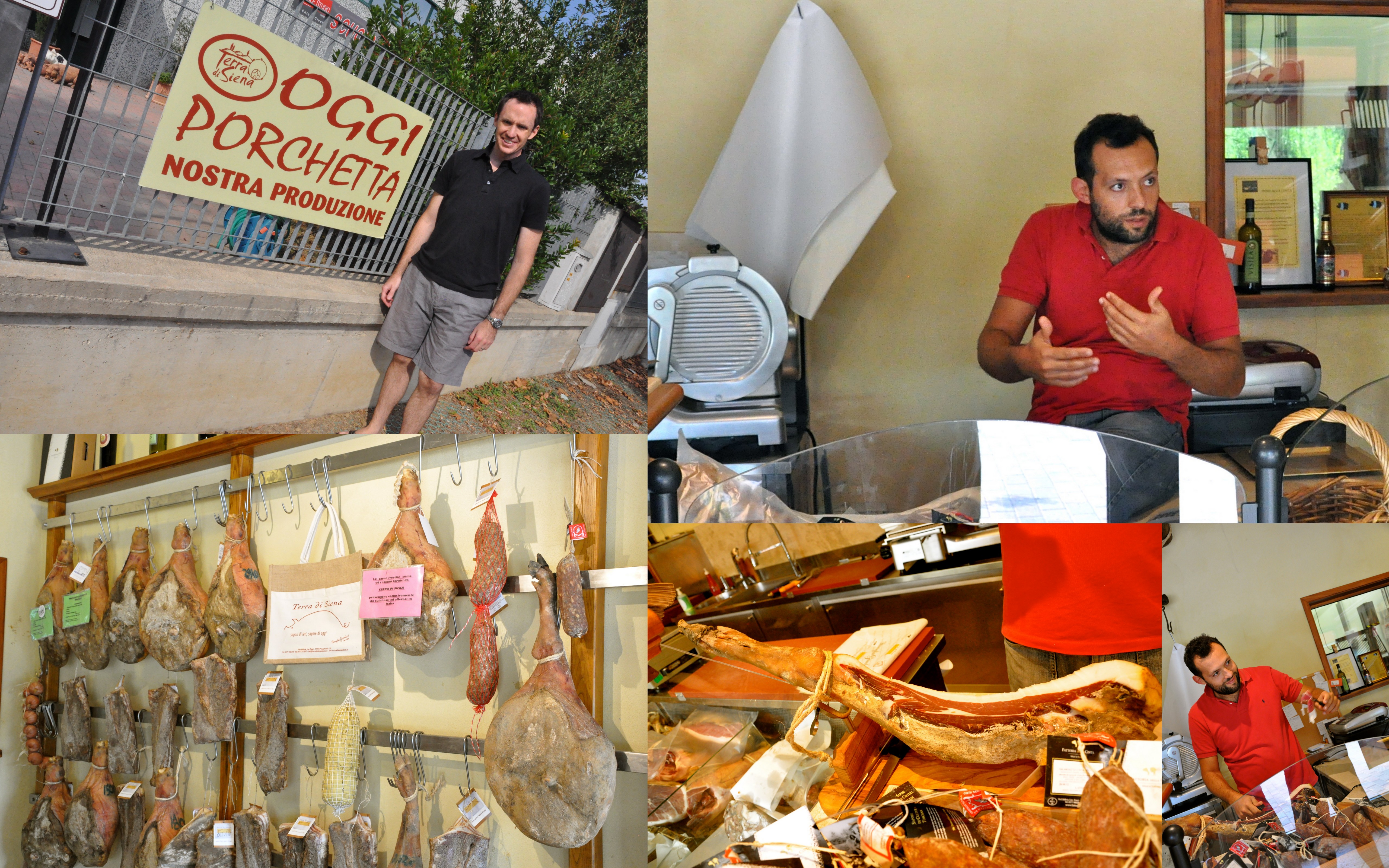
Since this trip was a terroir trip to experience food and wine, one of our stops was a tasting with a local Tuscan butcher, Filipo. He explained the history of the family business which was quite interesting, and then invited us to see the cinta pigs roaming on the land. Cintas are a different type of pig – they are striped – and they also graze on nuts, forest foliage, and berries.

On the trip over, we discussed how important we think it is to see the source of our food. Too often you forget. Filipo shaved our fresh prosciutto off the leg. This is a big reminder to me how we should respect our food and not waste. Also, the way that his free range cinta are treated is a lesson for how important these practices in when selecting what products we purchase.

I found it ironic I wore a white dress on the pig farm visit day.

SAN DONATO

San Donato is a tiny medieval town in the Tuscan hills. We had a wine tasting at Fattoria San Donato of local wine – vernaccia (white) and chianti (red) as well as their beautiful olive oils. A highlight was walking through the familial home to find our courtyard tasting in the groves.

SAN GIRMINGNANO

San Gimingnano is another charming Tuscan hill town, instantly recognizable by its peaking bell towers.

We tasted more tuscan wine and olive oil at La Marronaia, another friend of Kay’s who had a sumptuous cellar. We tasted basic vernaccia, visila, chianti colli sennesi, intenso and quattrossi. I brought back some olive oil to accentuate my Italian dishes.

Firenze!

Post by Lauren

Firenze is Florence in Italian.

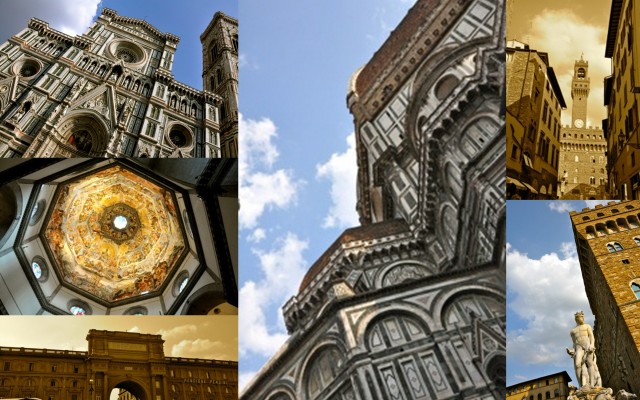
My first trip to Italy, my friend Randi and I stayed in Florence for the week for exploring Central Italy. And, Florence was really my first love affair with Italy. And, this trip, it still felt as good to walk those worn city streets.

We did a group tour as most of our group had not yet been to Florence:

I just adore the feeling of the streets. There really is no city that I have seen that maintains so much of its architecture. A few years ago, I read The Agony and The Ecstasy about Michelangelo’s life. I loved envisioning him as a young man in Florence walking these same streets we can today.

Gabe arrived later that evening and we did a family dinner at to Trattoria 4 Leoni which is my favorite restaurant in Florence. It was recommended to me in 2007 by my dental hygienist, Katie, who lived 2 years in Europe. I have sent many people there since and its always been a highlight for them as much as it has been for me.

We had a pasta primi which consisted of pear & asparagus ravioli, penne with a bolognese-type ragu, and a stuffed pomodoro pasta. Next, the ladies had Veal chops while Gabe ordered a steak alla grilia. Gabe and I were practically licking the bone-in portions. We aren’t used to eating meat out in restaurants in Geneva due to its ridiculous pricing and also that it really isn’t good. We are considering flying to Florence for dinner again in the near future 🙂

Afterwards, although we’d already had dessert, we could resist a stop at a gelateria for a cone. The tastes of Italy are so irresistible! It made a good snack as we walked back to Ponte Vecchio and enjoyed a calm peaceful Firenze evening.

Wine Harvesting in Emilia Romagna

Post by Lauren

Our second day, we took a trip down to the Emilia Romagna region of Italy which is famous for parmesan, grana podano, parma ham, balsamic vinegars, olive oil, copa and of course, wine.

Our leader, Kay, is friends with the owner of La Stoppa, Elena Pantaleoni, and so we shared a beautiful autumn afternoon with her at her family vineyards near Rivergaro.

Elena runs a completely organic operation, and we learned about the hard work required for this designation, but how very important it is for the preservation of the land. Gabe and I are both California wine lovers so it was interesting to hear the New World vs. Old World philosophies in wine. My biggest learning from both Elena and Alberto the evening before was how the Old World / European believes more in the terroir, and the wine is a result of the land, where New World believes the result is in the creativity of the winemaker, in the cellar.

Next, we tasted their different varietals. We started out with six on the table for tasting, but realizing how into their wines we were, they started making cellar trips to give us different vintages of our favorites and their new creations straight from the barrel.

The line-up of the wines was as follows :
-Dinavolino, Guilio, the wine maker’s creation from his estate
-Macchiona – 2005, then 2006, then 2007, then the 2002 which was a notoriously rough year
-Barbera del Stoppa
-Ageno – 2007, then the 2010 out of the tank

We tasted the wines alongside local meats like copa (the neck of the pig), salami and grana podano cheese. I enjoyed the flavors of the wine alongside the regional specialities of Emilia Romagna. The whites really were accentuated with the food.

In the end, I bought a Barbera and a Macchiona 2005. Unfortunately, I was limited to 3 to take back so only the Barbera will make it back to Geneva in the end as the Macchiona was the group favorite so was opened for sharing in Firenze.

It was a delight to spend this day with the wonderful people of La Stoppa. While I love learning about wine from all over the world, this special passion and pride is special to any other experience I have had in the States visiting vineyards. We felt like we were their family that day and are so grateful to Elena, Guilio and Francesca for their hospitality and inviting us into their estate. What an amazing place.

Sirmione and Lago di Garda

Post by Lauren

Apologies in advance for a week of Italy on the blog. There was just to much to fit!

The first stop on our trip was to Sirmione, Italy which is located on Lago di Garda in the Northern Italian region. Sirmione rests on a skinny little peninsula jetting out into the lake, providing panoramic views all around. A medieval castle rests on the tip and provides a reminder of the rich history in the Northern Italian lake region.

Here are a few of my favorite photos of Lago di Garda captured at sunrise the first morning:

The night prior, we had the pleasure of seeing a wine harvest in process at nearby Pratello winery in Padenghe del Garda. Alberto took us around the vineyard, showed us the biolake, and we also explored the cellar and grounds. He took a few jabs at California wine production indicating that “wine shouldn’t taste like wood” and then explained how they use steel tanks or neutral oak. He had a great pride of the Italian viniculture and it was contagious.

We had a delightful tasting evening of their sparkling wine-Metodo Classico, their whites-Catulliano & Lieti Conversair, and their reds – Poderi Ogaria and Rebo. Following, we had an incredible meal al fresco on the terrace.

I purchased the Rebo and also brought home a bottle of sparkling for a future occasion.

Storing up for winter

Post by Lauren

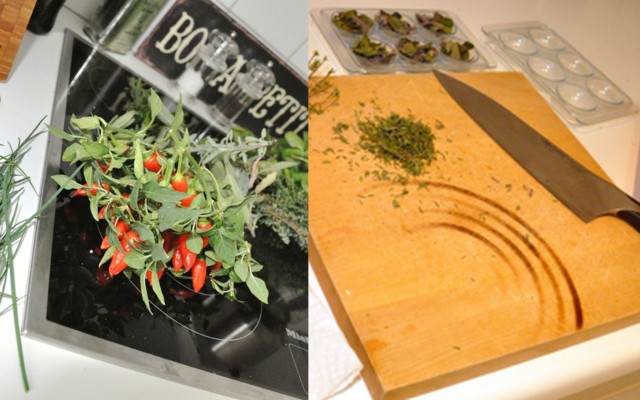
It’s going to hit freezing this week, so I decided to cut my herb plants & beautiful pepper plants before they are killed by the frost. I took our ice cube trays or egg holders, whatever they are (see post on Schwingen and Switzerland for more on this topic) and filled them with freshly chopped herbs and topped them off with water. I store them in baggies so I can pop them into pastas and soups through the winter.

Already, our flat is very cold. I am bundling up when I am home.

Why not turn your heat on, you might ask?

Well, we don’t have control of our heat. The regie (people who run the building) decide when its cold enough to turn on the heat for the building. At that point, we can control our little radiators throughout the flat.

Until then, I am going to look like an eskimo bundled up inside our home.

Wine O Clock

Post by Lauren

Our favorite Geneva festivals are wine festivals.

Reason # 1. Swiss wine is pretty good. And, you’ll have to come visit us to experience it. In keeping with Swiss tradition, they only like to consume their own agricultural goods. This is based on knowing their own are of higher quality (like everything Swiss) and more historically, on WW2 and the refusal to be dependent on anyone else for food. So, by the time they drink their own supply, only 1% is left for export.

Reason # 2. Doing independent wine tasting on your own requires a lot of work. Wineries are only open 10-noon on Saturdays. I have learned customer service and pleasing the public is not on their list of to-dos. So, you’d have to be well-planned to visit more than 2 in one weekend due to the short opening hours. Plus, I am sure you have to be fluent in French for it not to be awkward to show up at someone’s farmhouse ready to taste.

Reason # 3. Past Success. You might remember our first weekend we attended Caves Ouvert , where we met A & A and also D. We were delighted to go 2 for 2 with the A’s for Geneva wine festivals. They hosted an awesome pre-game brunch to lay good groundwork for the day. Sadly, D was not with us but we carried her around on a popsicle stick all day for photo ops. 2 out of 5 (the guys) thought this was creepy. But, all the girls enjoyed the humor in it and we made sure D on a stick had a good time.

Things we learned for next year:

–Don’t show up at noon for the Russin Wine Festival. Things don’t get started until about 2pm-3pm. We wondered around a ghost town Russin until about then.

–Babies aren’t allowed to drink

–If you dress up in a Father Wine Suit, you are likely to have lots of pretty girls pose with you.

–The most important lesson comes tomorrow. Be sure to tune in.

In the meantime, for more facts on Swiss wine, check out Schwingen in Switzerland.