We graduated from Guinness Academy

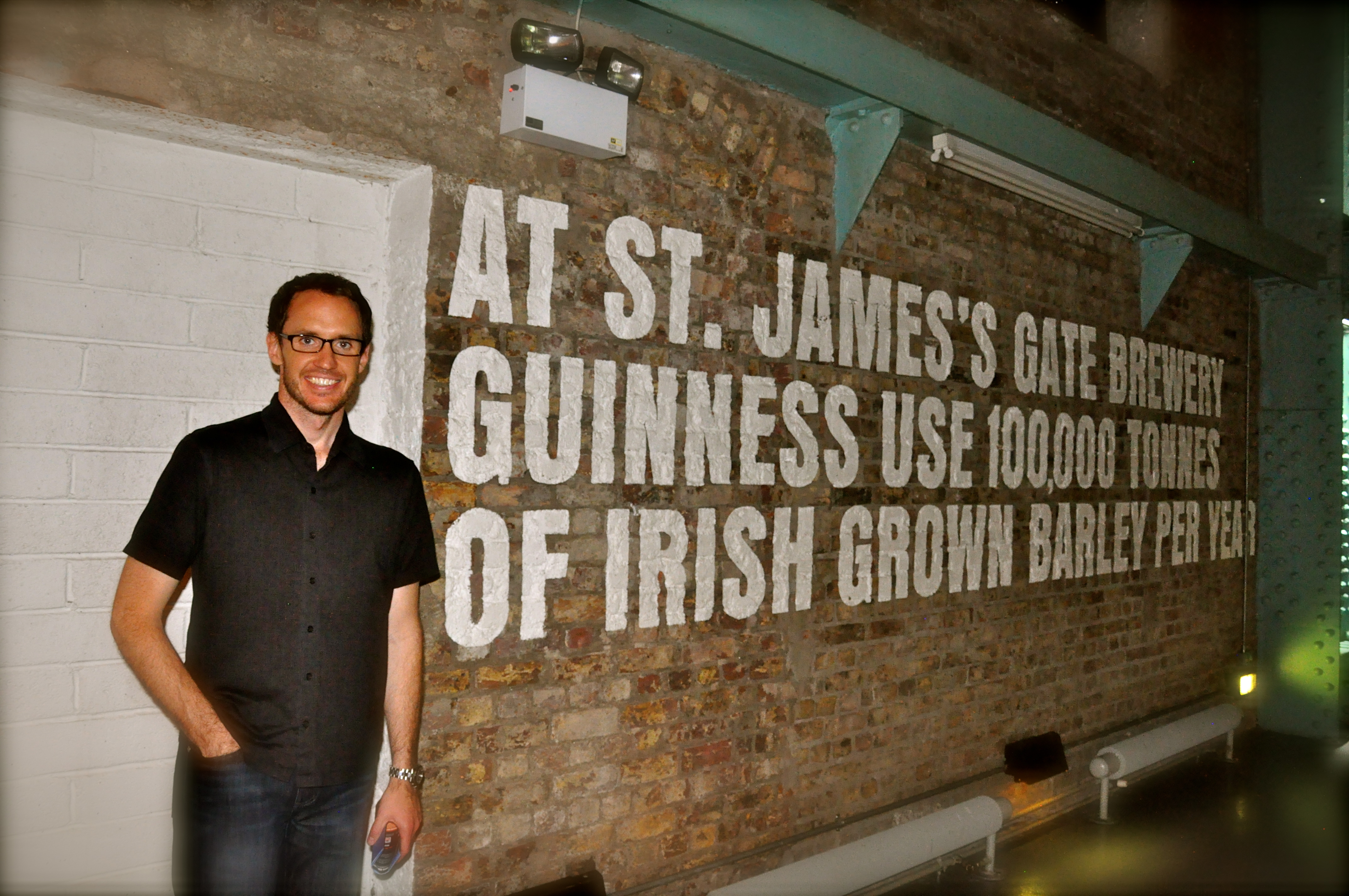
A must for us in Dublin was the Guinness Storehouse.

A few fun facts about this iconic brewery:

-When Arthur Guinness took out the lease, it was for 9000 years.  Now that is thinking ahead.

-The factory spans 55 acres in downtown Dublin

-3 million pints are brewed at St James Gate each day

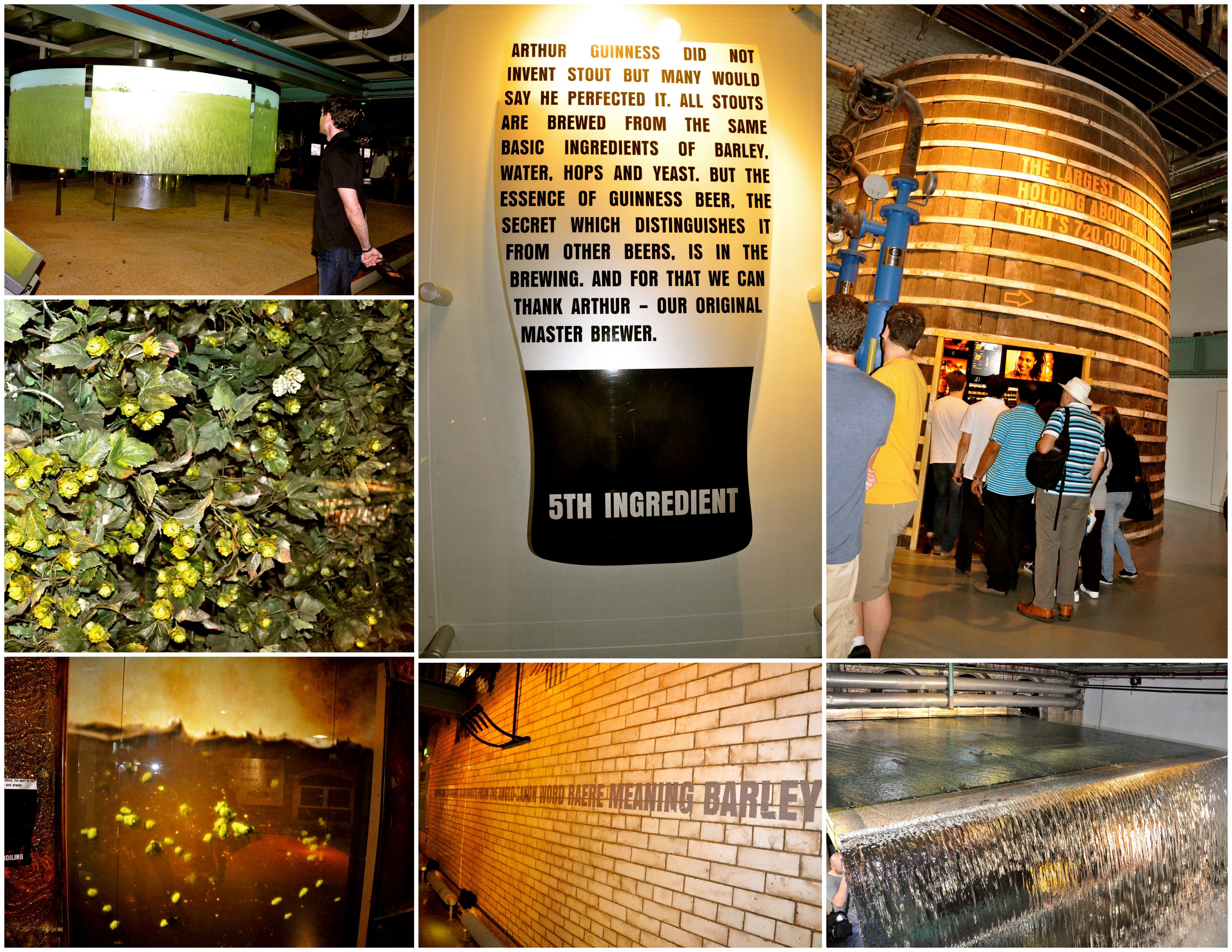
Every beer tour we’ve done has included a visual tour about the ingredients they use – barley, hops, water and yeast.  Guinness did as well, but claimed a 5th ingredient too.

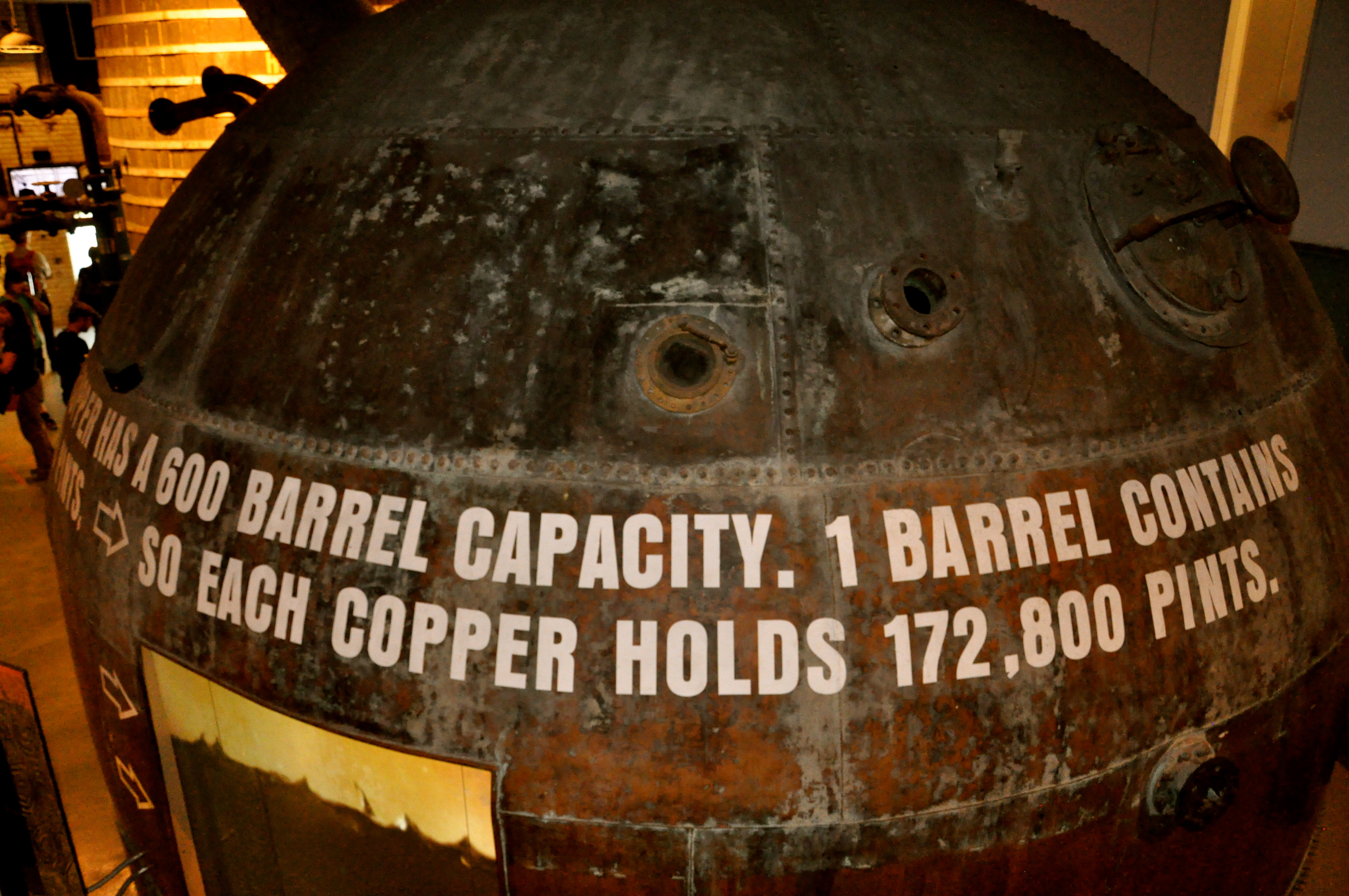
Also every beer tour we’ve done included the process.   In going to Jameson the day after, we learned making whiskey is almost the same.

The steps for Guinness beer are:

Roasting

Mashing à Wort

Boiling

Fermentation

Maturation

Casking

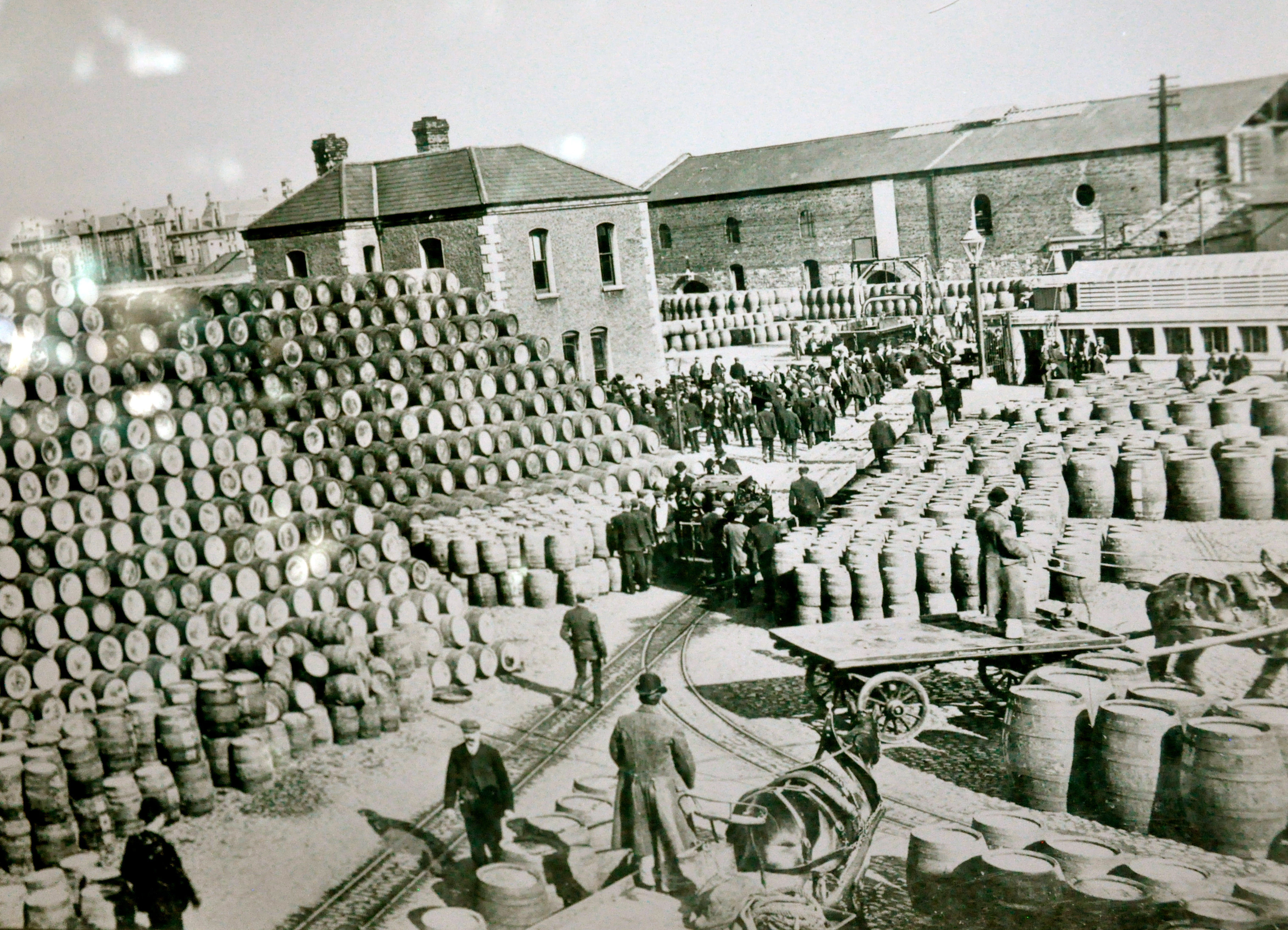
Transport

Making Guinness back in the day

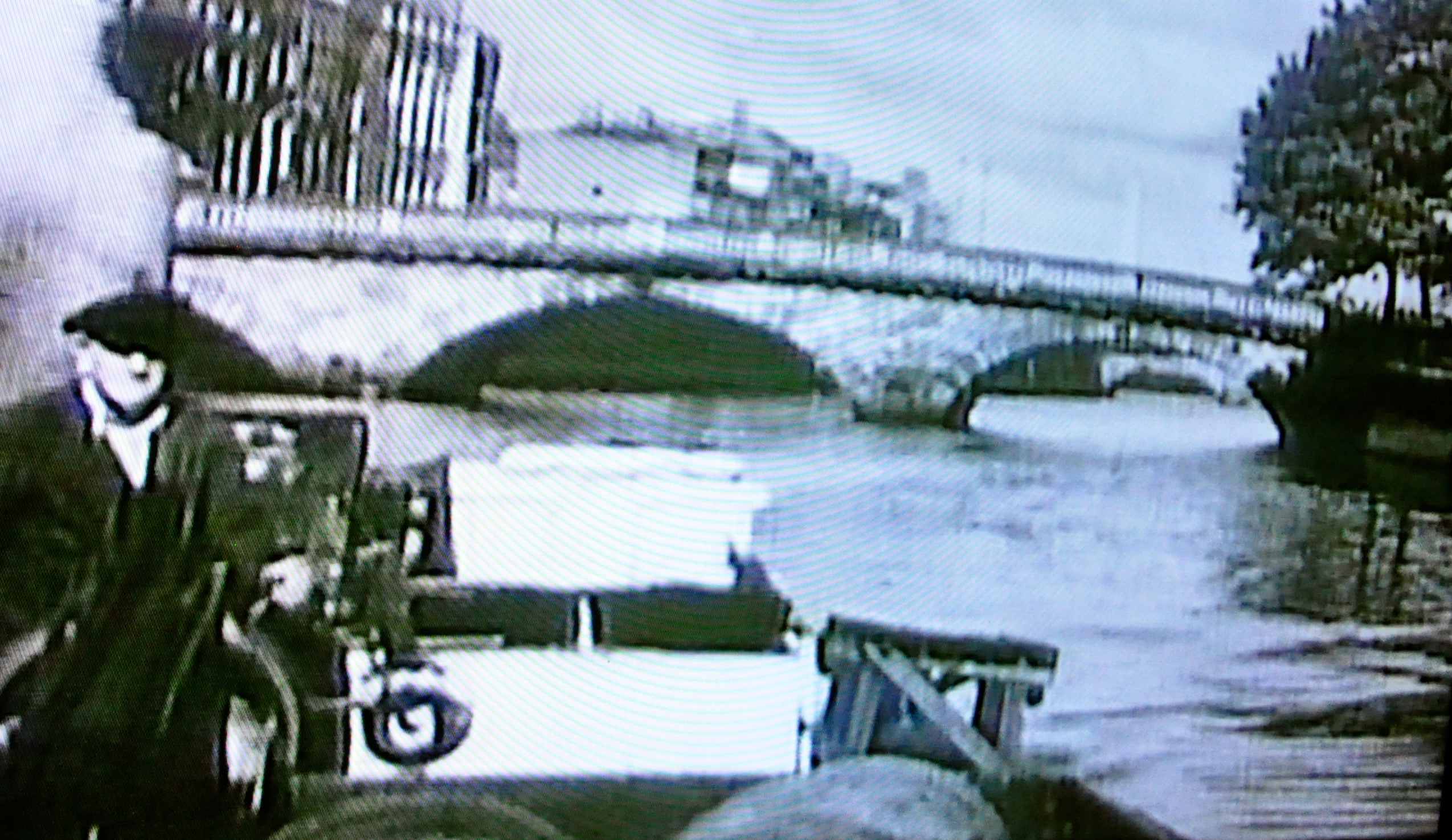
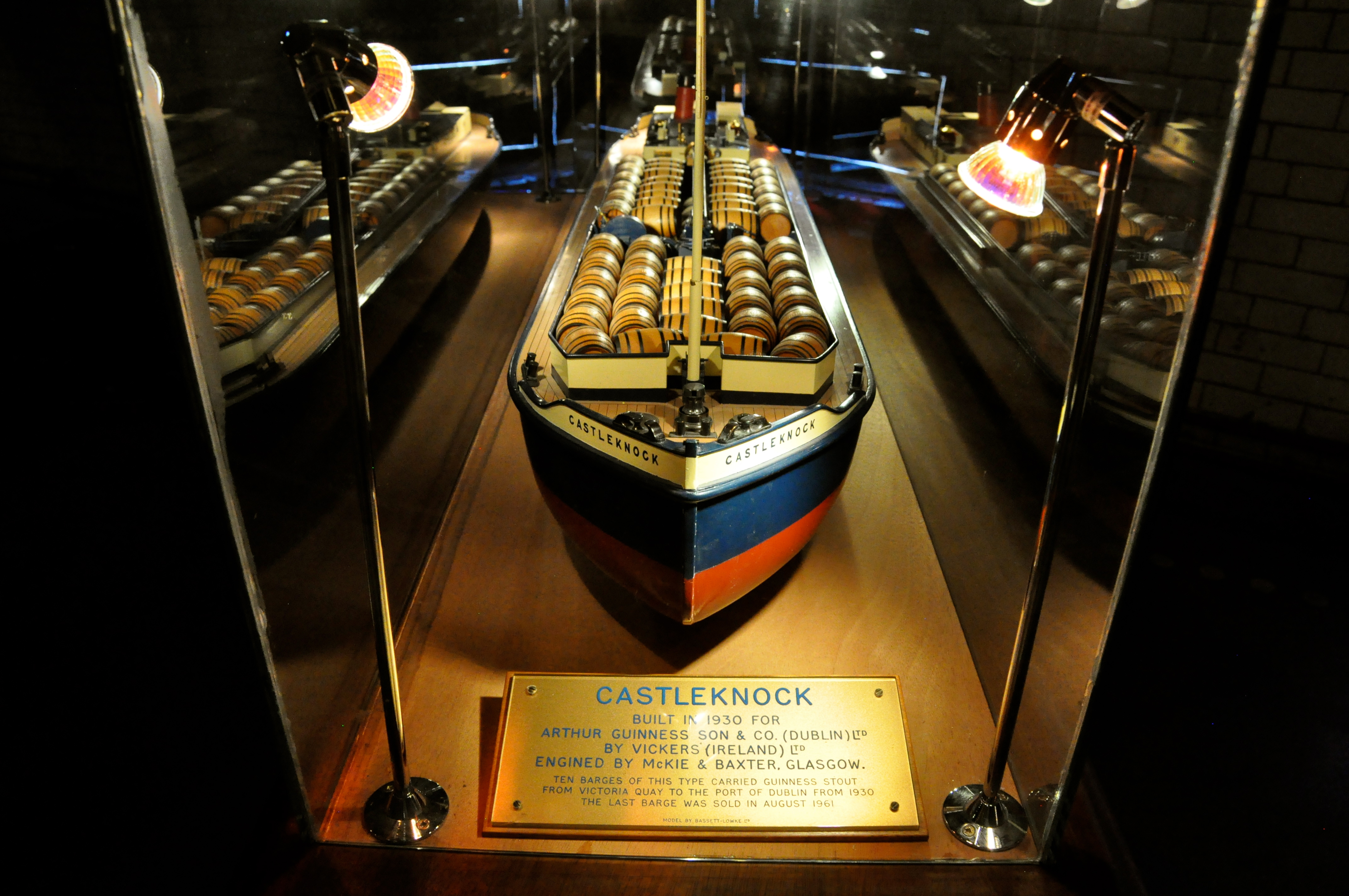
I found the area about transportation particularly interesting.  Since it was brewed downtown, they had to make special boats to get under the low Dublin bridges:


They also had to get it overseas:

How’d you like to be the captain of this boat?

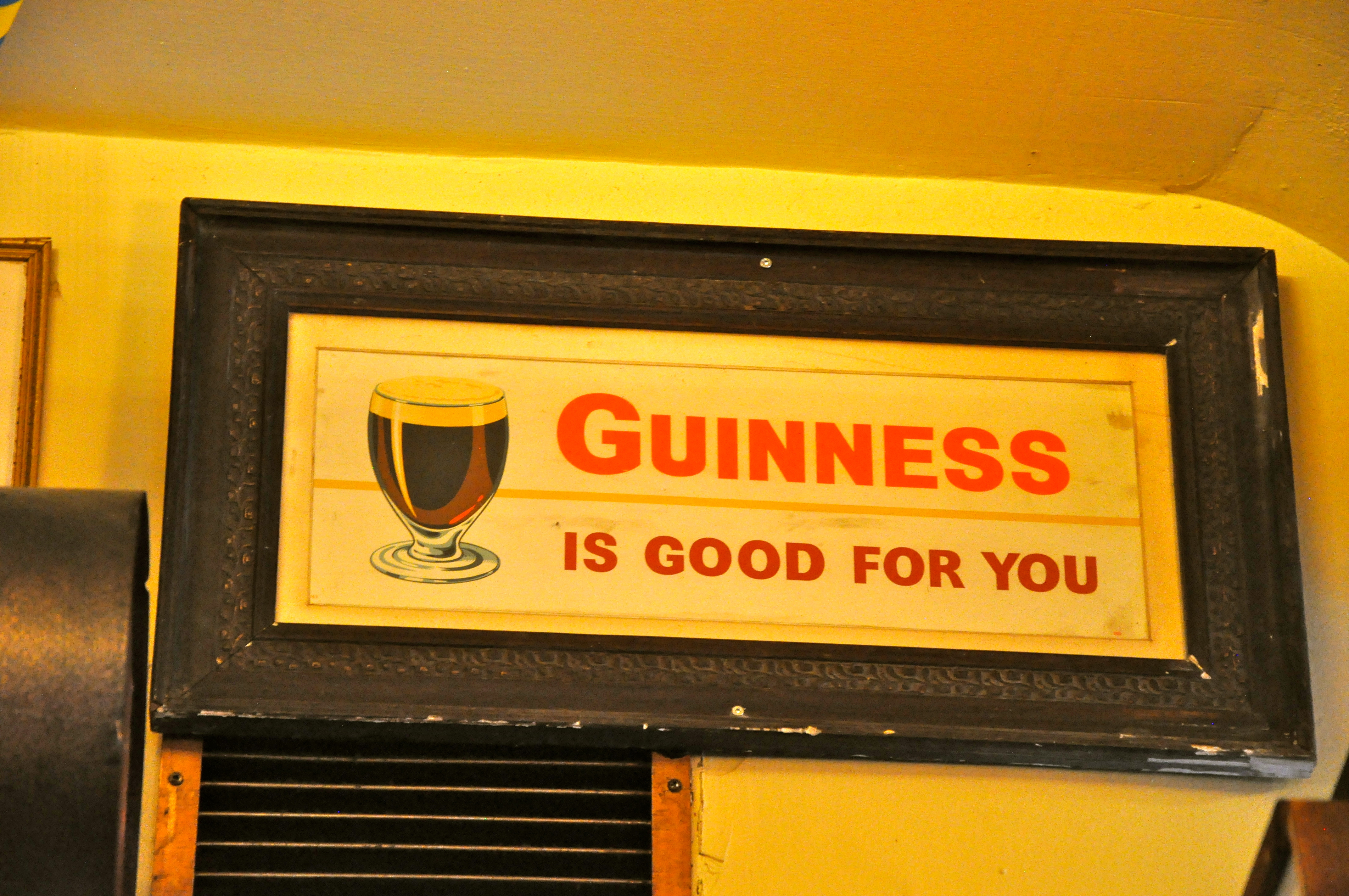
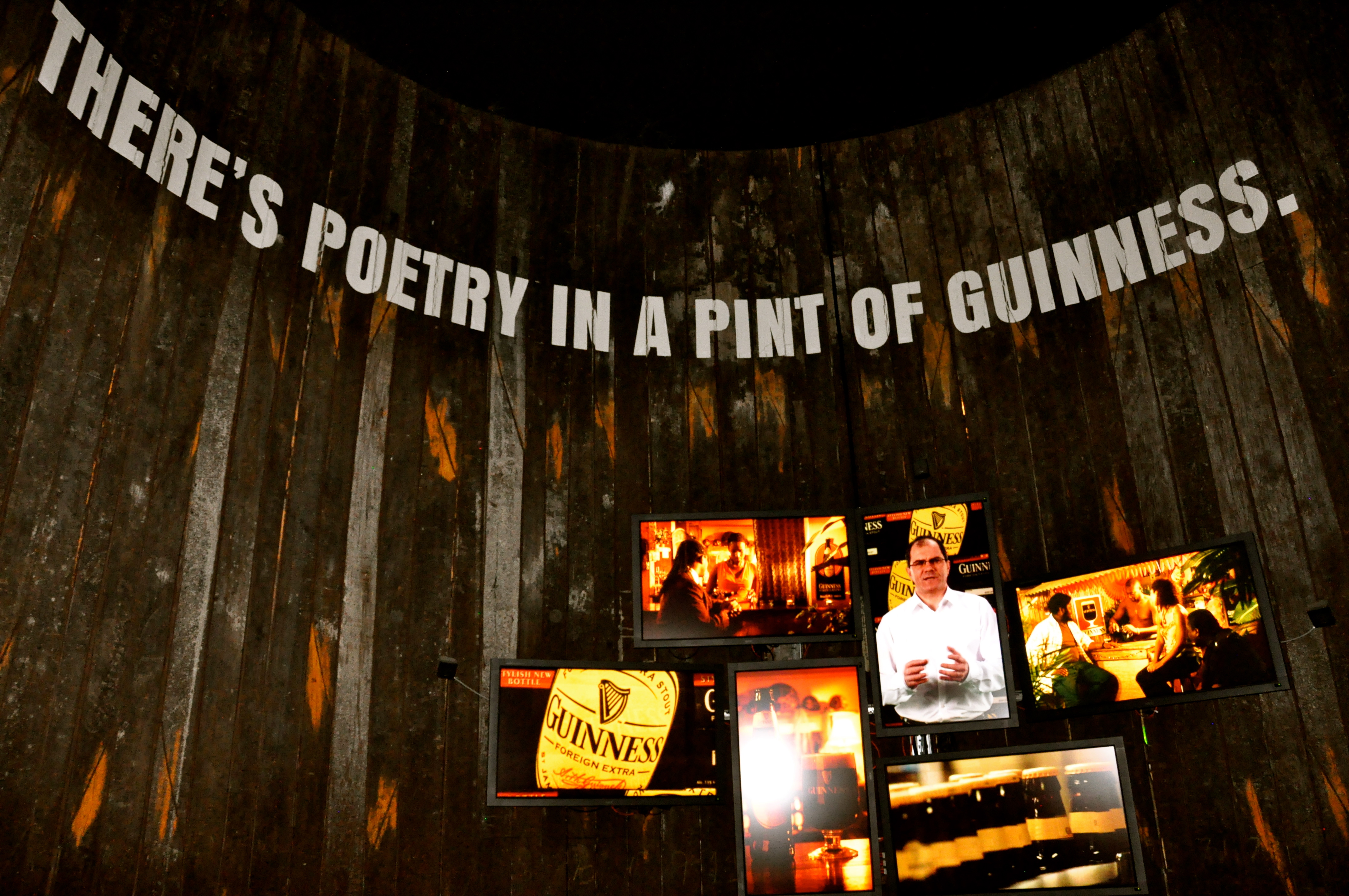
Love their slogans

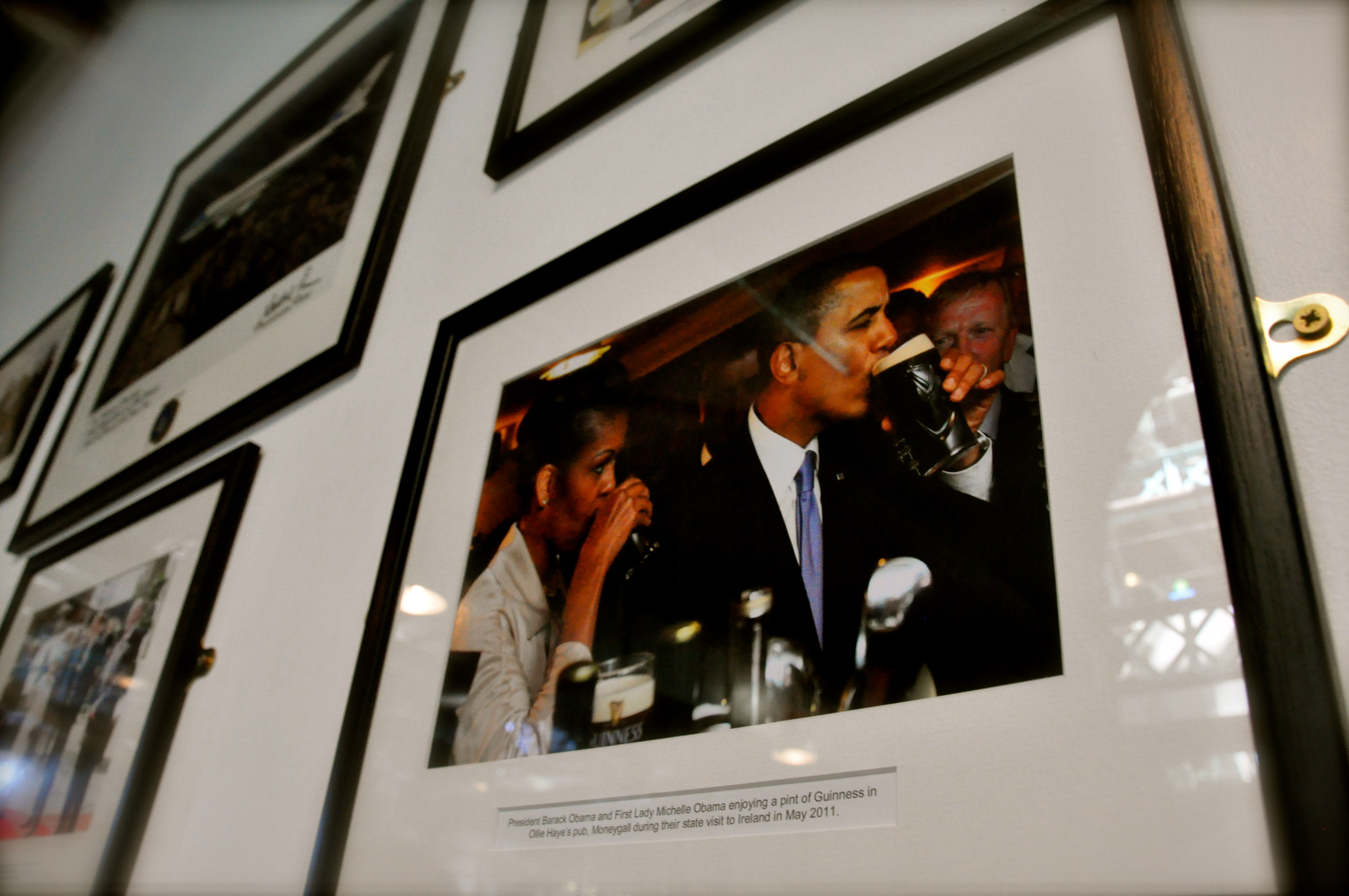
The Obamas enjoy their Guinness from time to time.

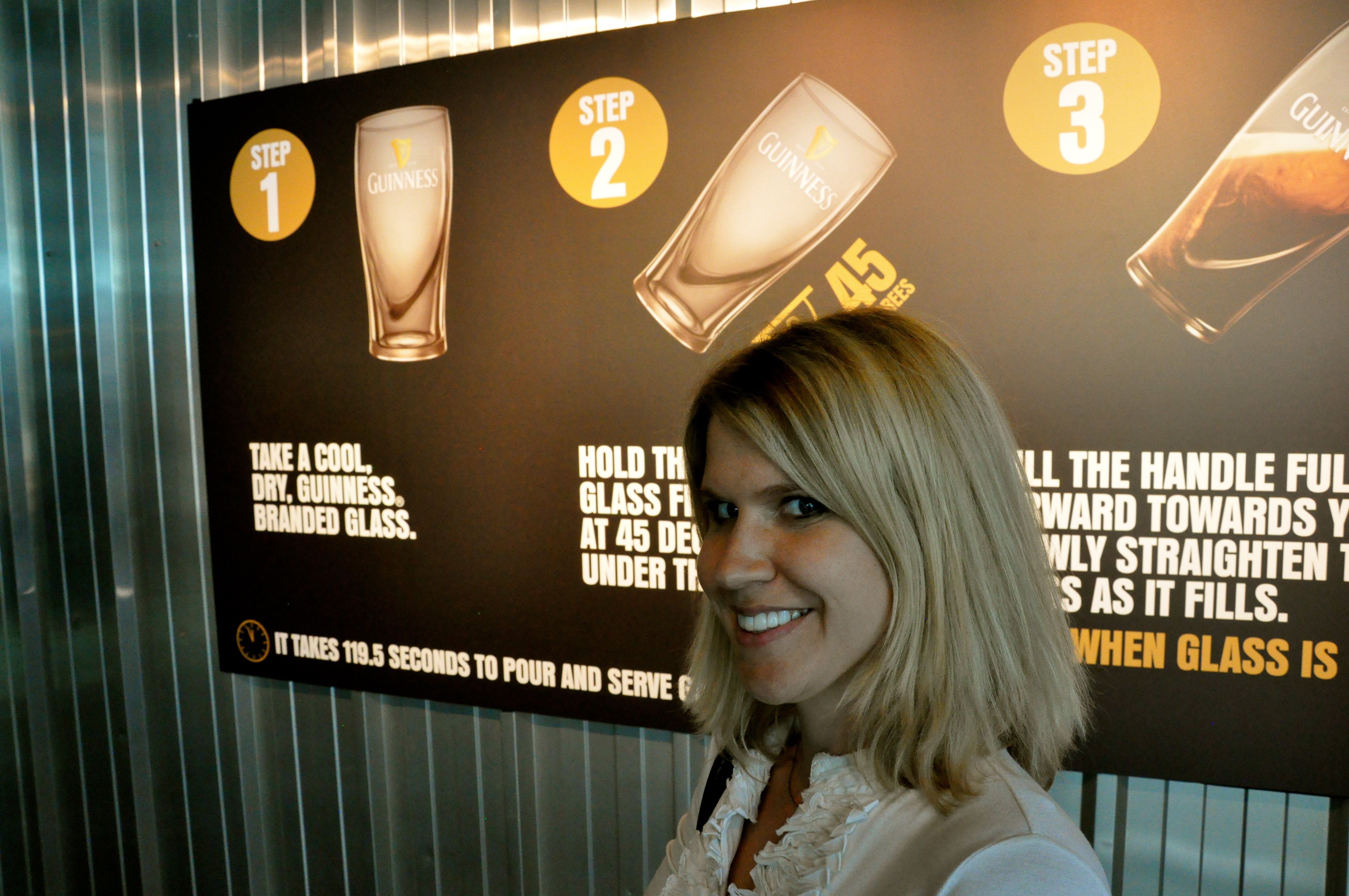
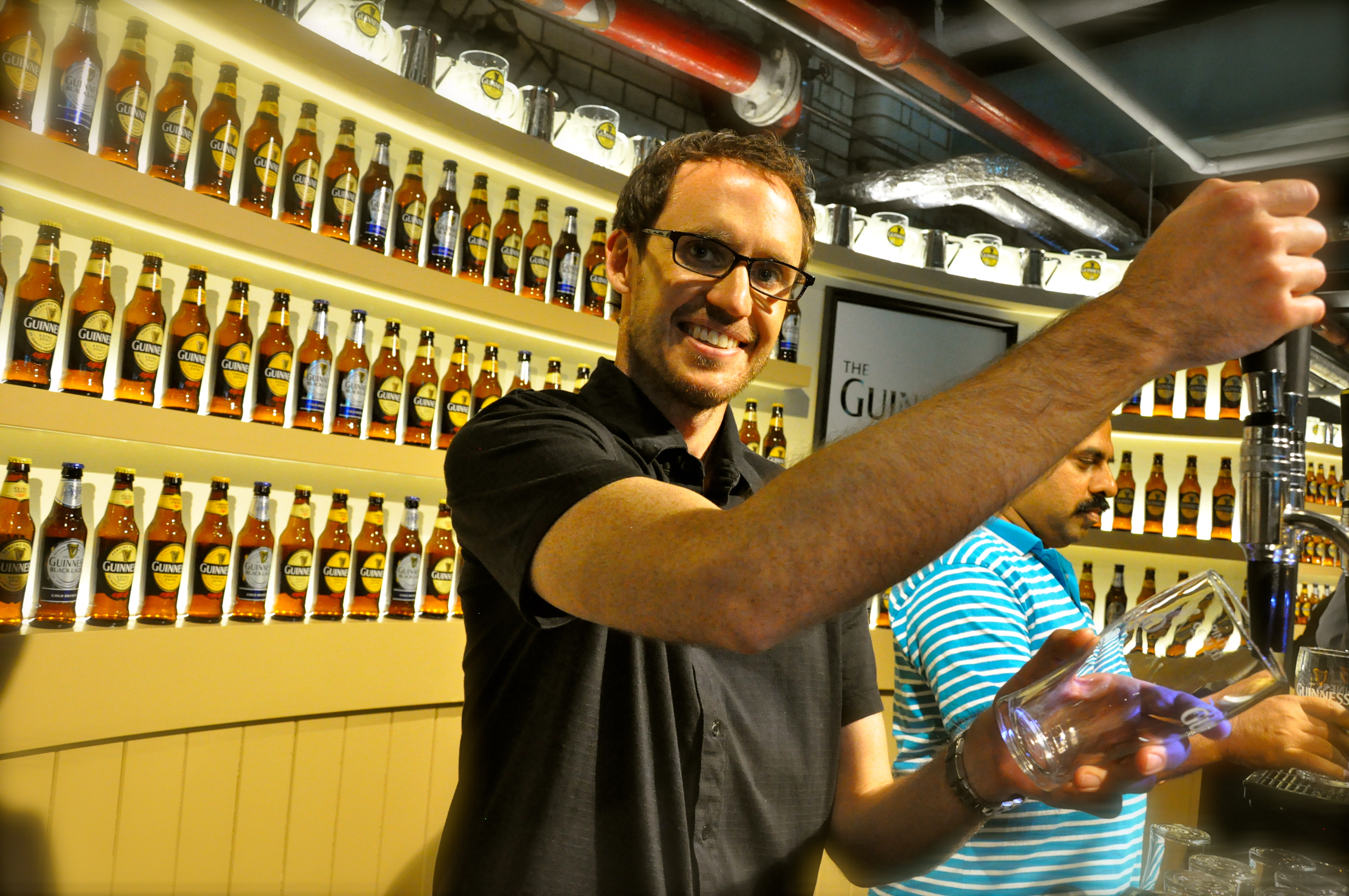
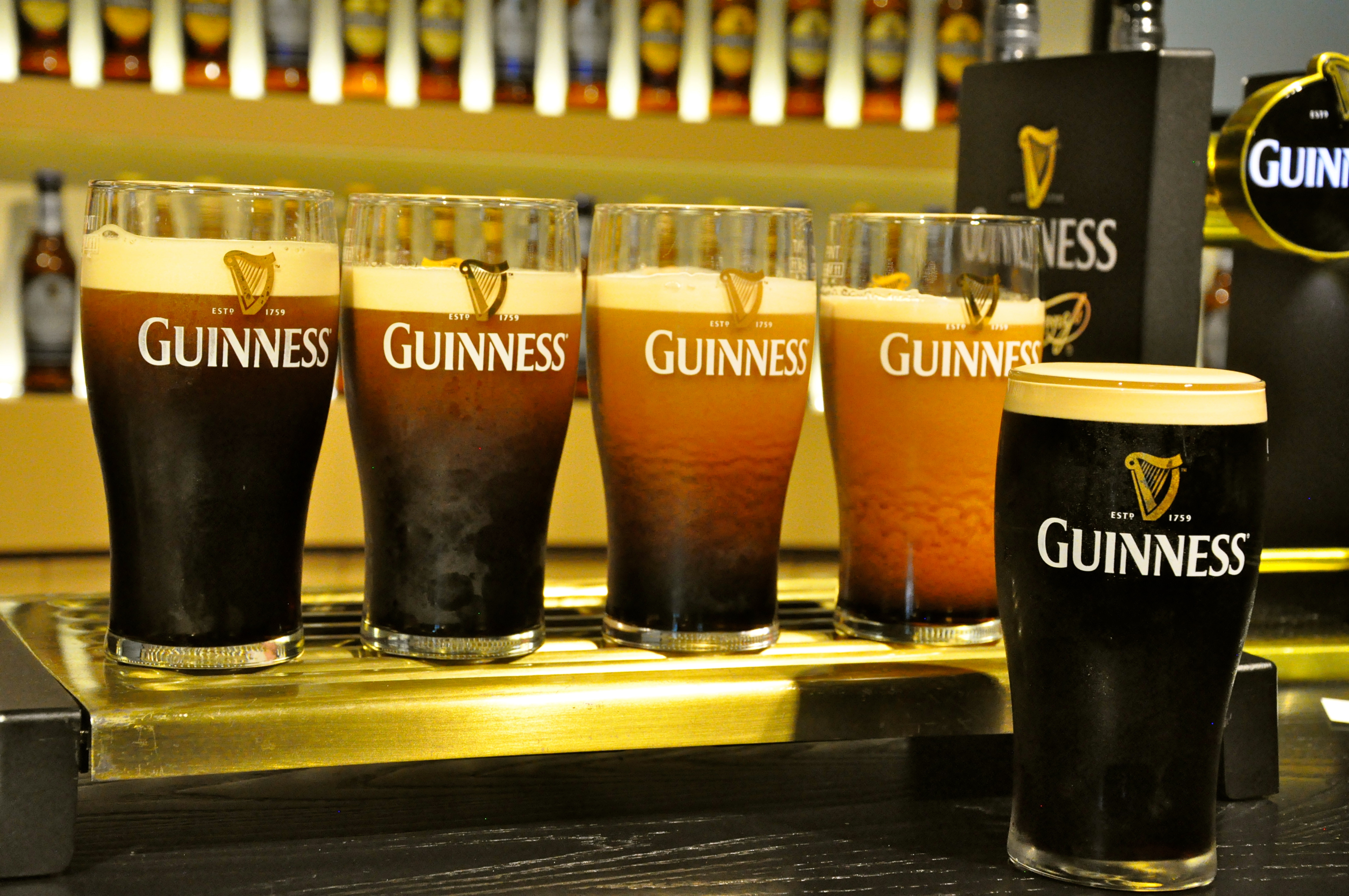
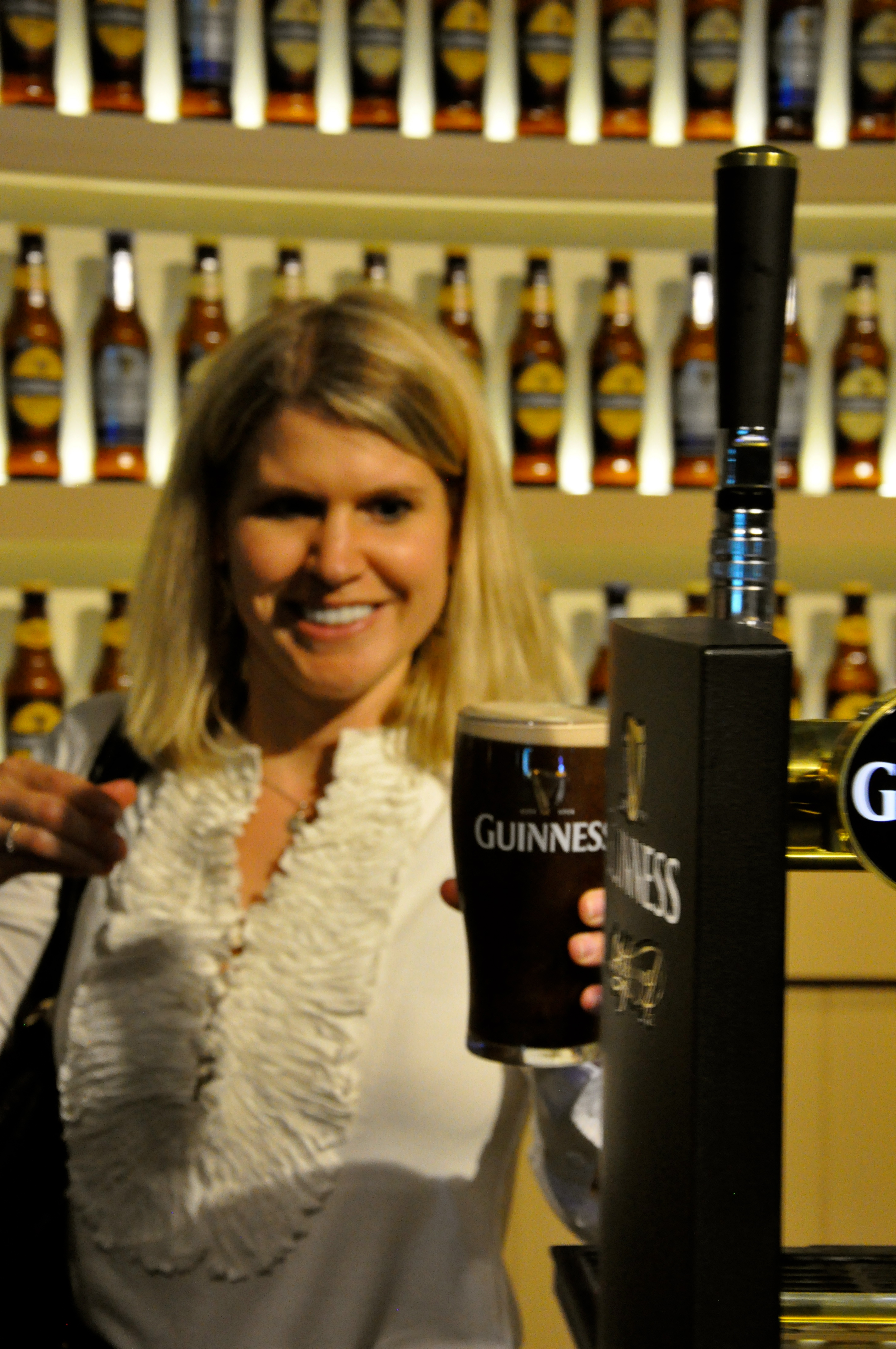
You’ll be happy to know that we graduated from Guinness Academy.  We even got diplomas.  This was the most fun part of the tour….learning how to pour a Guinness.    Now, at Heineken, you could do this with water and a tap, but at Guinness they really let you do it.   And pouring a Guinness is more involved than you would think!

First you must inspect the Guinness branded glass to make sure it is clean and absent of lipstick.  Being a marketing person, I appreciated the branding mention.

Next you tilt it and pull the tap toward you.  You fill it up to the Guinness logo then slowly tilt the glass upward and stop the tap.

You must let it rest.   Notice how the lighter ones have just been poured and the darker have rested a bit?  That is due to the special tap and helps accentuate the flavor.


Once dark, then, you top it off with a slow pour by pushing the tap backwards.


Then you proudly serve it.  Good things come to those who wait.


They also have a pretty sweet Gravity Bar to enjoy a drink:

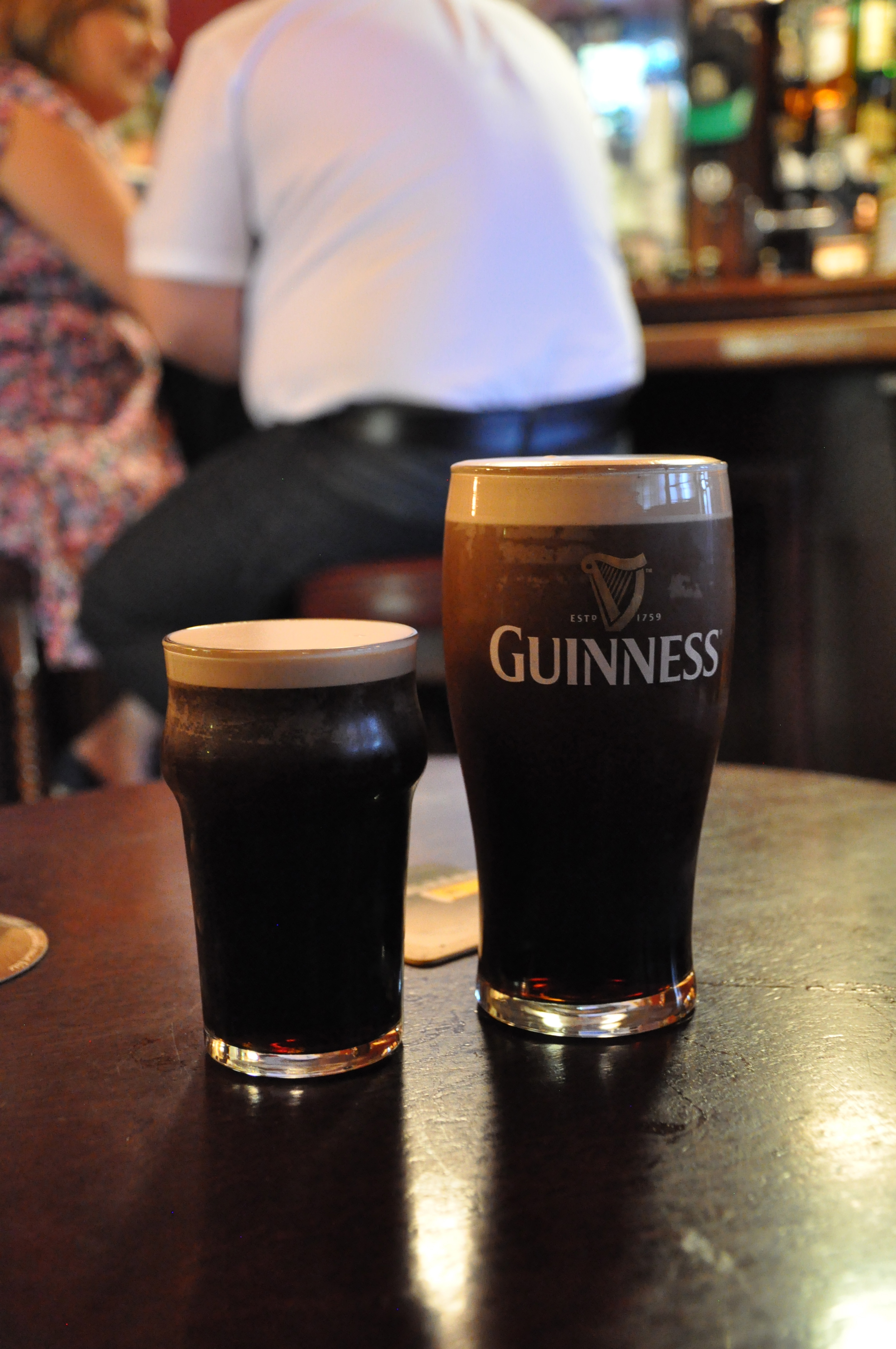
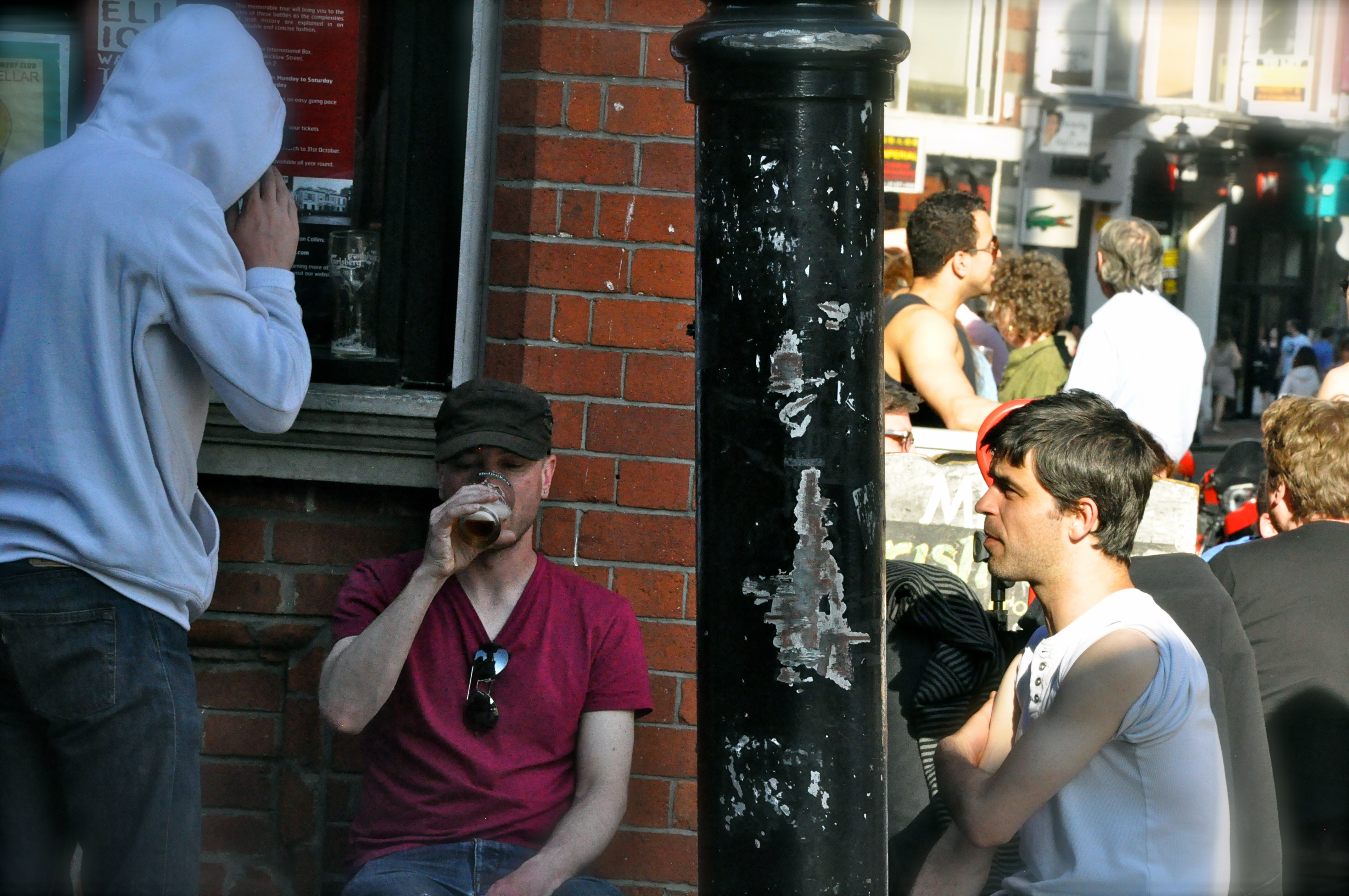
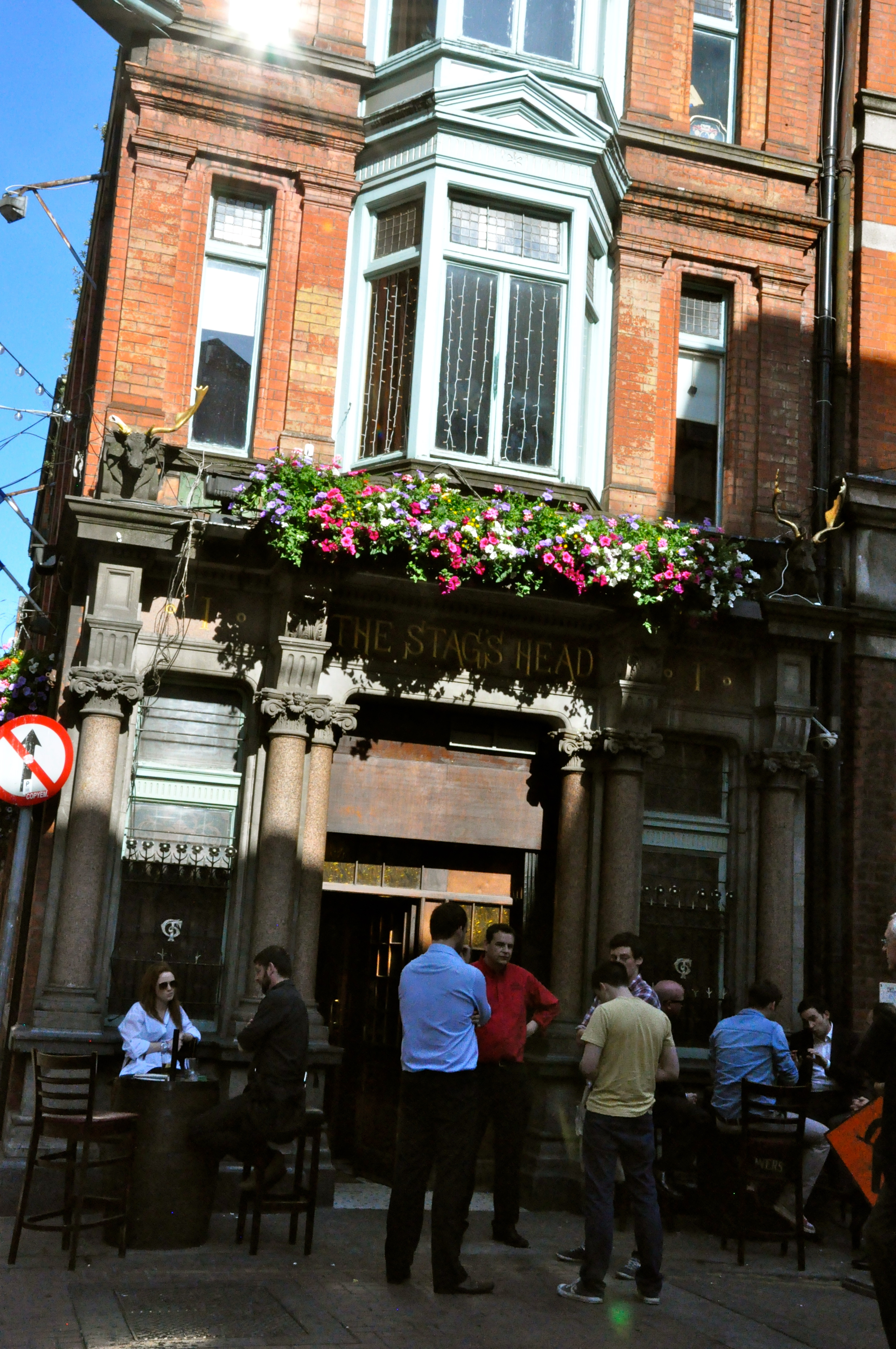
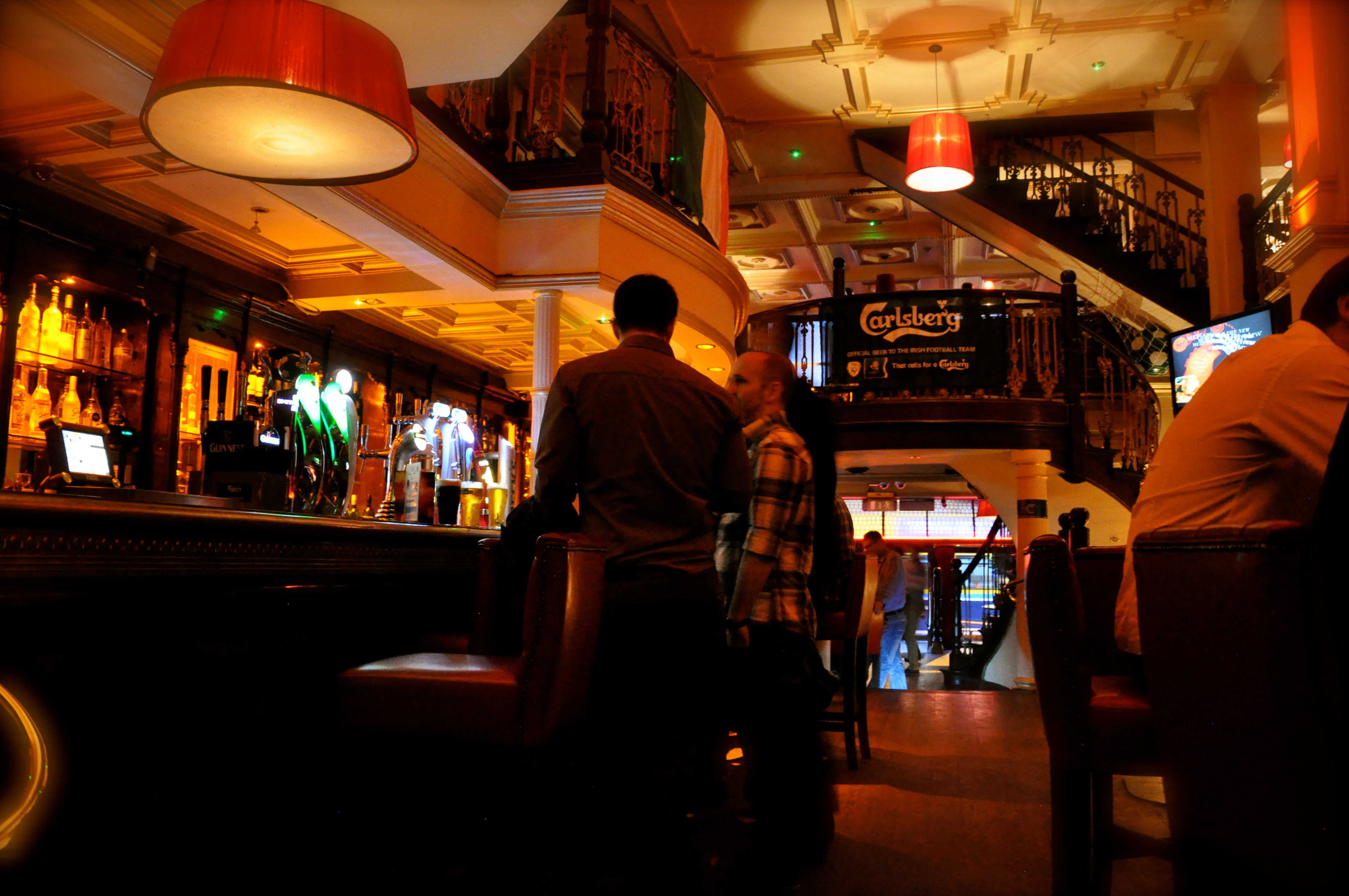
You can order by the glass if you can’t drink a whole pint.  I did this when we visited all the pubs in Dublin.  It allowed me to keep up with Gabe “glass for glass”.   At Stag’s head, they even had teeny branded Guinness glasses.

Gratitude Friday: Sunburns in Dublin

We just returned from a fabulous long weekend in Ireland.  In preparation for our trip, we knew to expect rain.  My friend K told me her grandma says, “You don’t go to Ireland for the weather”.  We had heard stories of friends who never saw blue sky the entire time.

When the weather forecast included a sun, I refused to accept it.  After all, you know Murphy’s law.   So, I prepared my warmest sweaters and scarves to take.  A raincoat.  And an umbrella.

We were greeted with sun.   And it stayed.  We know this was unusual based on the research we did.  It was also accentuated by the Irish.  Every time we saw locals greet each other, they quipped about the unbelievable weather.   It was all the radio stations talked about.

We dripped with sweat in our jeans and long sleeves.  We were burned slightly.  We couldn’t be happier.

The city was so alive with people appreciating the turn of good luck.

Crowds filling the streets for happy hour

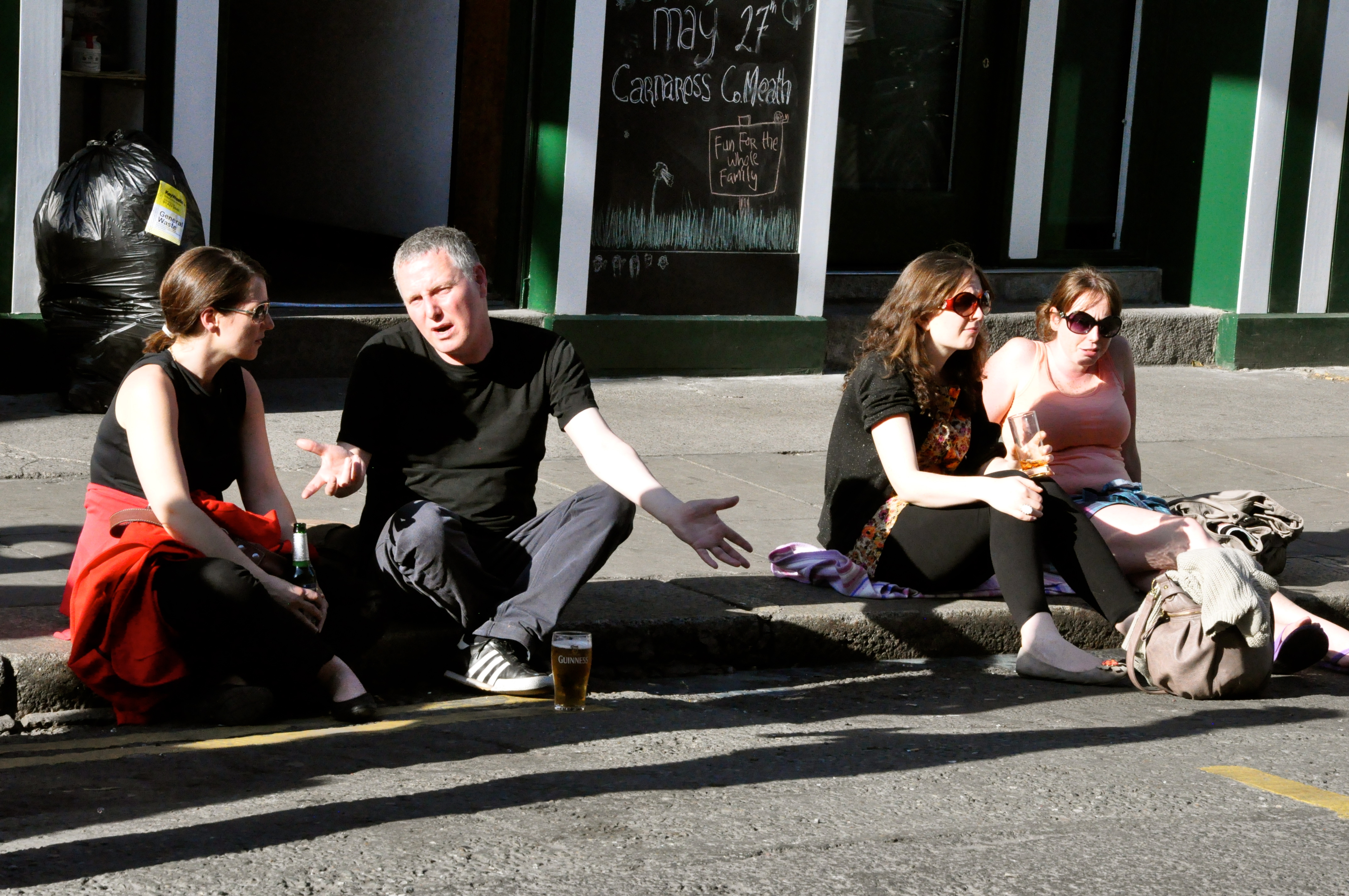
Loving the sun

Some sought the shadows

It was warm enough for street dancing in the evening

Even forgetting about the sunshine it donned on us, we loved the city of Dublin.   It was evident that it didn’t need the sun to have warmth….in the colors, the personality of the people, the liveliness of the local joints.

This guy might have had a little too much gratitude for the sun

And I am not just saying it.  The people were some of the nicest we have come by so far in our travels.  Sure, the English not being a barrier helps.  Two examples to further illustrate:

#1 – Gabe and I were debating where to go for lunch.  We had the map out and we knew where we were, just more bantering about when and where.  A businessman walked up to us and inquired, “Can I help you find your way?”.  Out of the blue he wanted to help us.

#2 – I had a little bit of a red eye the second morning (no, not the Guinness!) and we inquired about the nearest pharmacy so I could get some Visine.  As soon as we asked, the receptionist at the hotel came over, worried, and said, “now what’s wrong, what can I do?”  We told her the simple answer and she embraced me and gave my shoulders a rub, empathizing with me.  Even though my little malady wasn’t a big deal, it was really nice of her.

We knew the Irish people were great as we have a friend in Geneva who has set a first example.  We love her bubbling personality and art for conversation.  We really appreciated seeing the city in which she lived, colorful and fun, along with more friendly folks, just like her!

Luckily, she and her partner had given us lots of good tips for what to do and see…and most importantly, where to eat and have a Guinness.   So, we did just that.  I thought I’d share the list for those traveling to Dublin soon:

Elephant & Castle, recommended by T, this was a delicious lunch spot in Temple Bar.  They have great burgers, salads, and wings.  Loved the duck salad.

Stag’s Head – we went there for an early drink one night and for music the other night. Great Guinness and service.

Gabe enjoying Stag’s Head music

Me enjoying a glass of Guinness at Stag’s Head. Just my size.

Temple Bar – we walked by this when exploring the historical area and it was also a fun place for a drink with live Irish music

O’Neill’s. They have a hearty Irish buffet served all day. Also great Guinness and a very traditional atmosphere.

We stayed in the Mercantile Hotel. It was an awesome location with friendly staff. They also had a sweet bar below.

In addition, we really enjoyed outdoor lunch at Kitchen, and our pre-theatre dinner at La Stampa.  Sorry no pictures there.

We did one of the Hop On, Hop Off Buses.  I’d like to say we only did it to save my feet, but we really like these sometimes to scope out the area and it provides cheaper and direct transportation.  It did additionally help with the feet though.  We loved seeing Trinity College, St Stephens Green, Christchurch, St. Patrick’s Cathedral, and our stops at Guinness Storehouse and Jameson.

So, Dublin gets an A+ in our books.  Very grateful for our sunny experience.

Bon weekend, everyone!

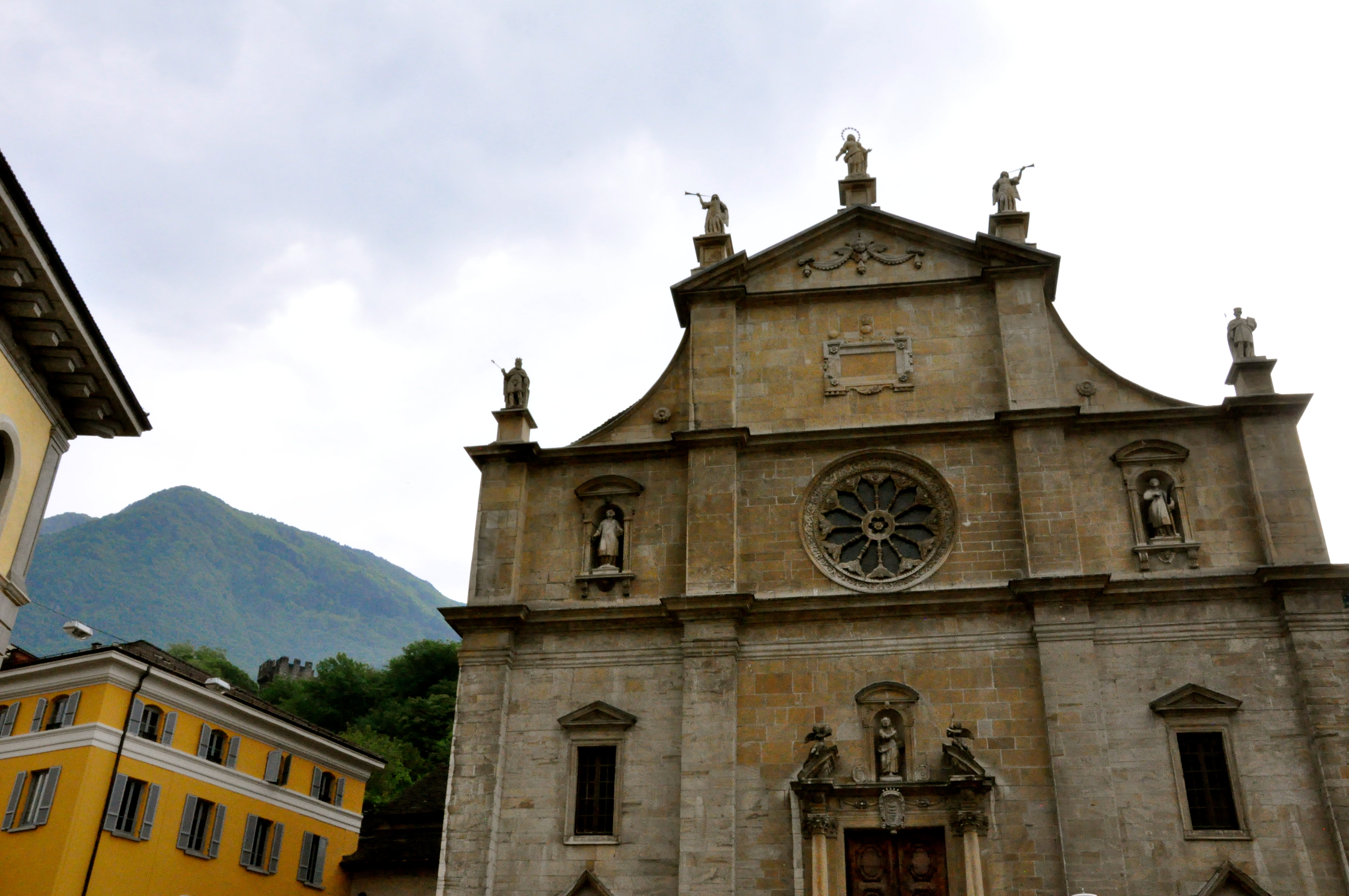
Bellinzona, Switzerland

Bellinzona, located in the Ticino part of Switzerland, is an quaint medieval town.   It is best known for the three castles that dominate the landscape.  The castles were awarded the UNESCO world heritage designation, based on their key role in protection of an Alpine pass in medieval times.

In my recent Castles in the Sky post, I explained that castles were built at elevations for defense.

In Bellinzona, there are three:   Castelgrande, Montebello, and Sasso Corbaro.

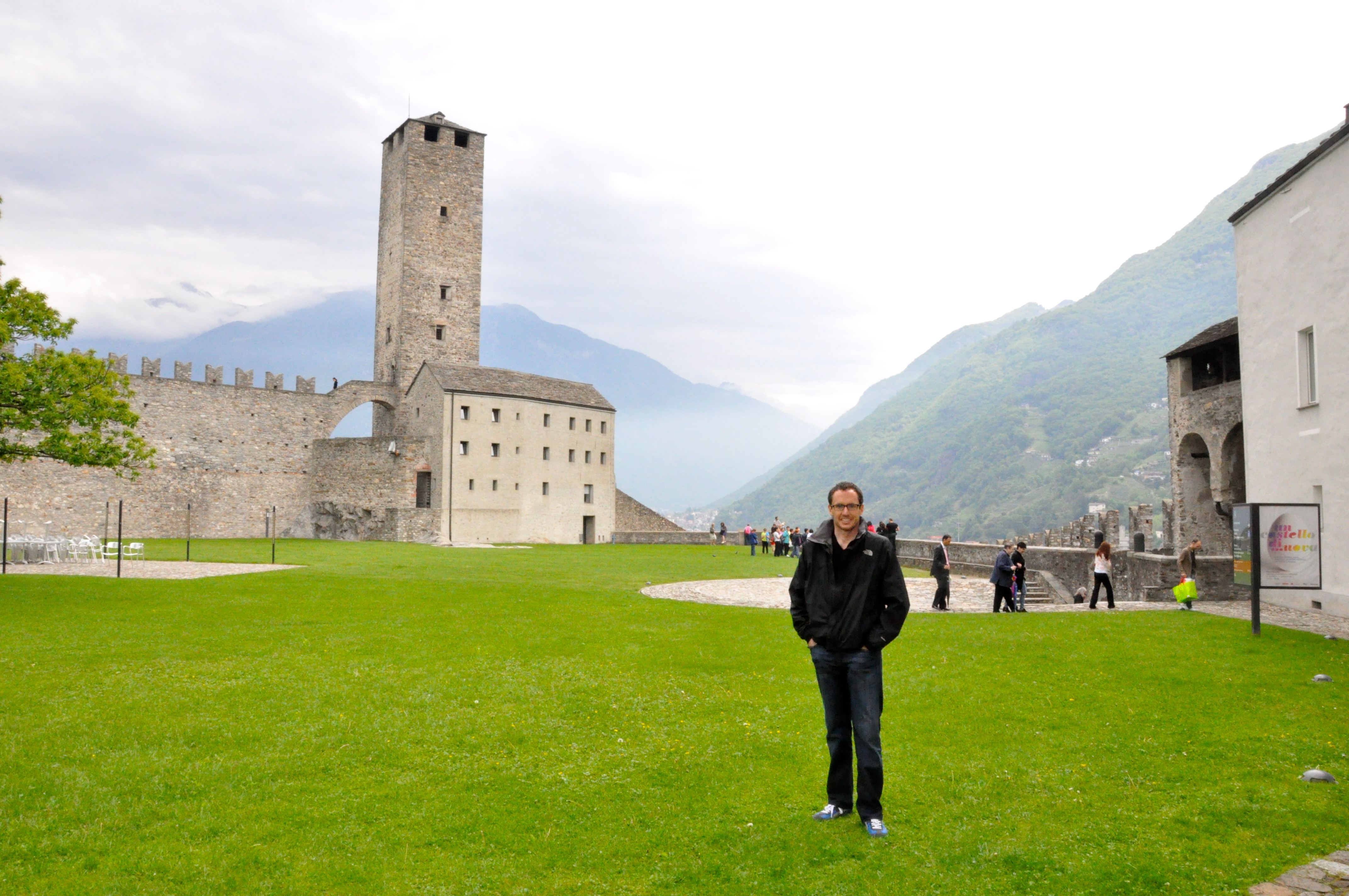
We were limited on time so just explored Castelgrande.   Luckily for me, there is an elevator that shoots you straight up through the castle to the inner courtyard.  This is a godsend since my feet aren’t in hiking condition yet.  Visiting the other two is a much more significant effort in walking / climbing.

The town of Bellinzona was quiet on the rainy Sunday we stopped in

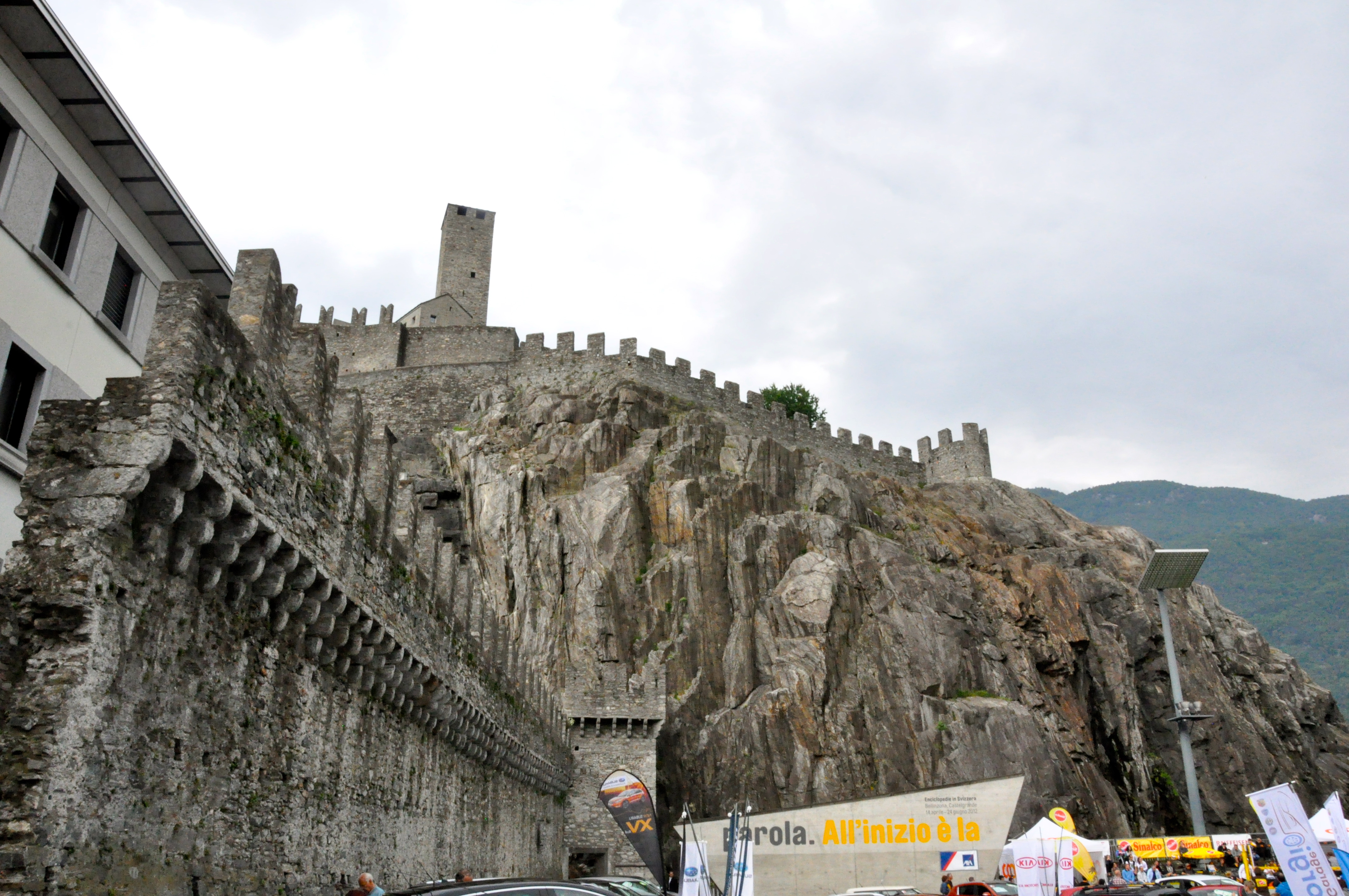
View from below at Castelgrande

A first look on the upper courtyard of the castle

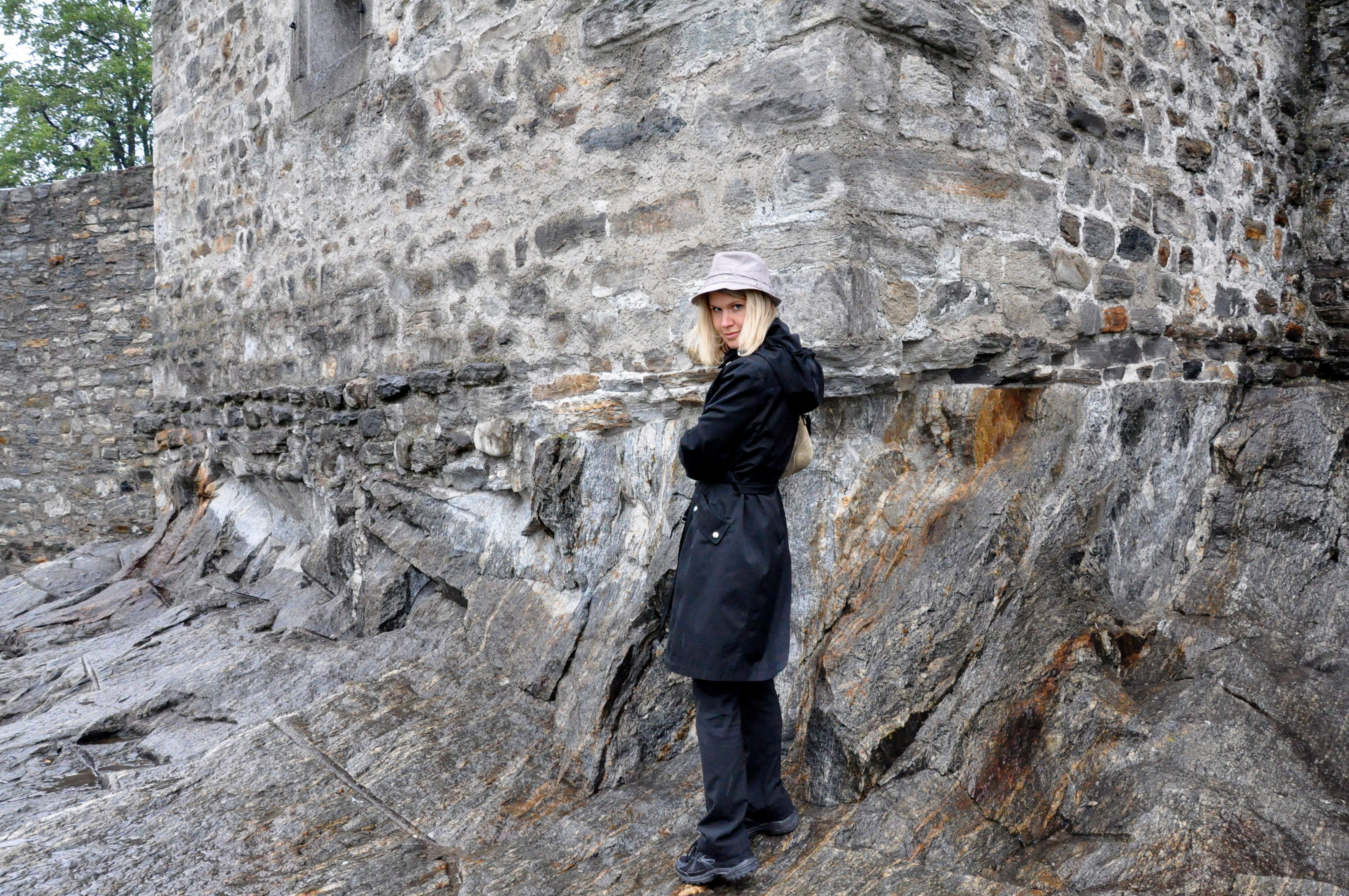
Yup, its pretty securely built on this rock.

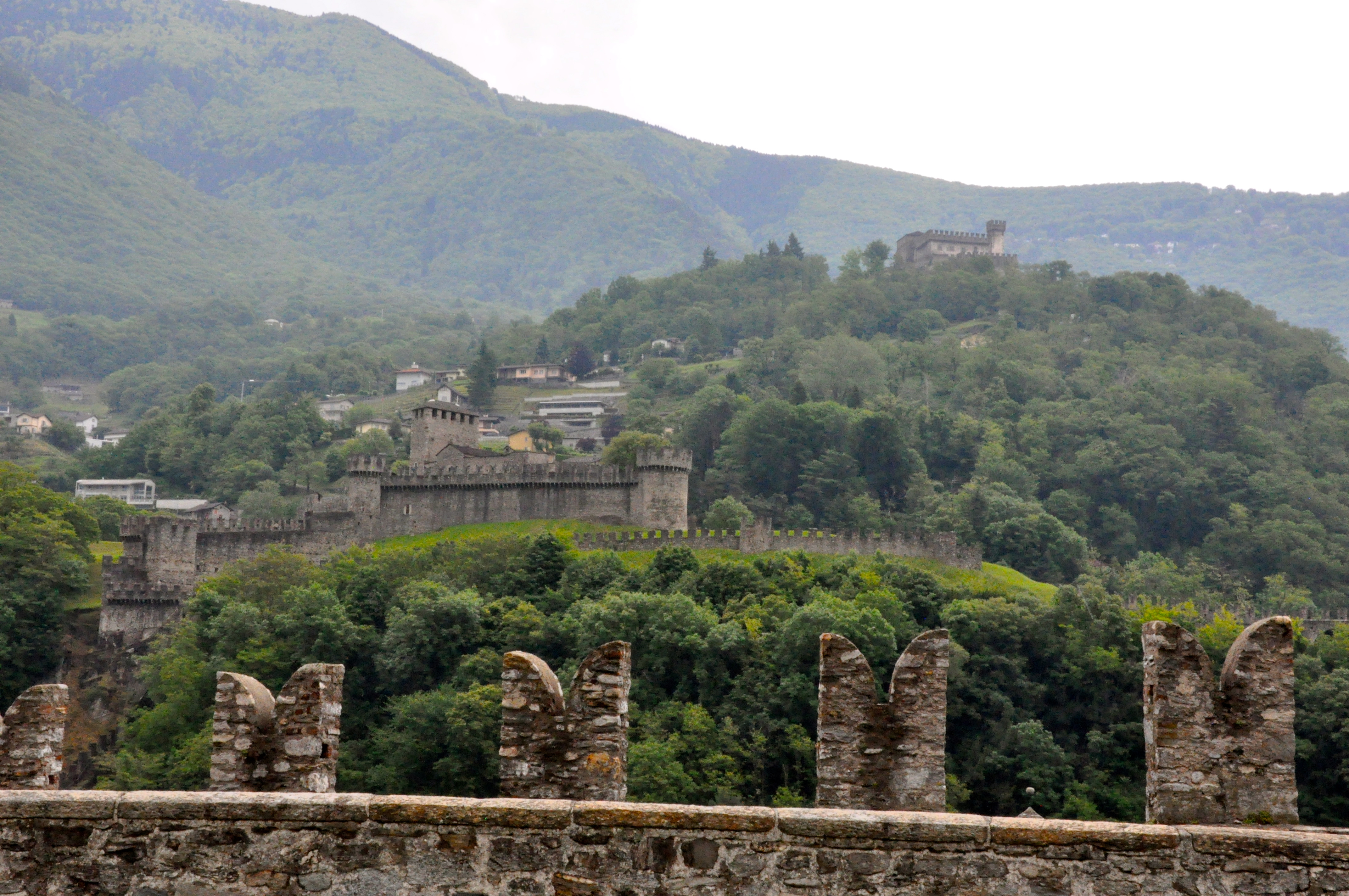
We admired the view to the other castles.

We were hungry and it was starting to drizzle.  We decided to dine inside the castle where we had read that there was a great restaurant offering Ticino style meals.

Since it was Italian style, we decided to continue the trend of ordering two courses, a primi pasta course and a secondi meat course.   This was a mistake, at least for me.    The first courses came out huge.  Oops.   However, it was so delicious, I finished every bit of my taglietelle with Ticino ragu.  And Gabe finished his gorgonzola gnocchi.    Sorry that I didn’t get a picture before we ate it.

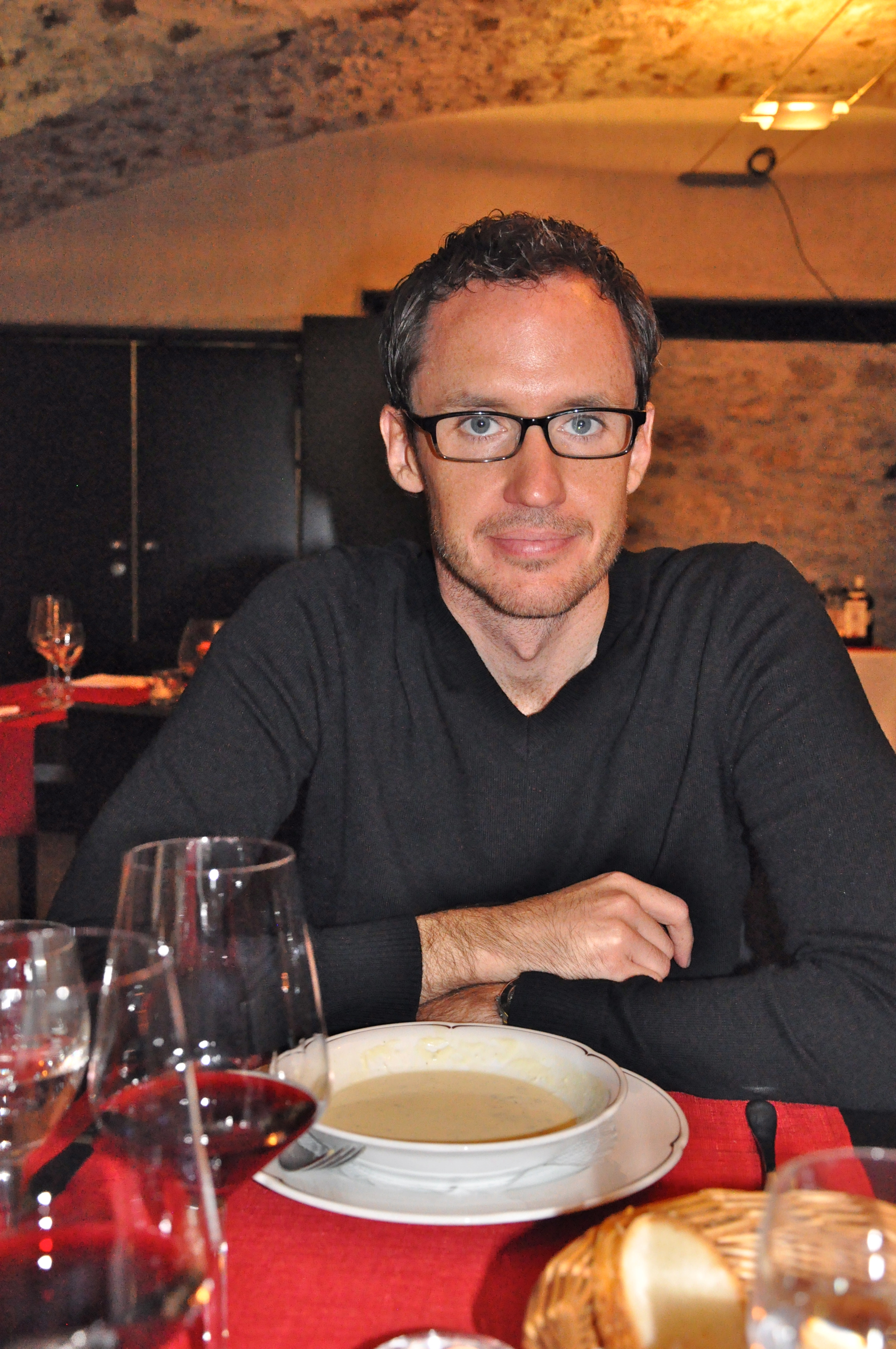
Eating inside of a UNESCO castle.  The sauce that once contained gnocchi.

The meat courses were equally as good.  Gabe almost finished his veal piccata.   I didn’t come close on my beef.   I vowed that I wasn’t going to order Italian style anymore.  I would have been just as content with only a pasta course.  The ride home we were stuffed.

However, all in all, we were impressed with the Italian Switzerland cooking.  It was just as good as Italy.

It was already 2pm, so we decided we better head home.  Especially since we weren’t 100% sure how to get there.


Caves Ouvertes 2012

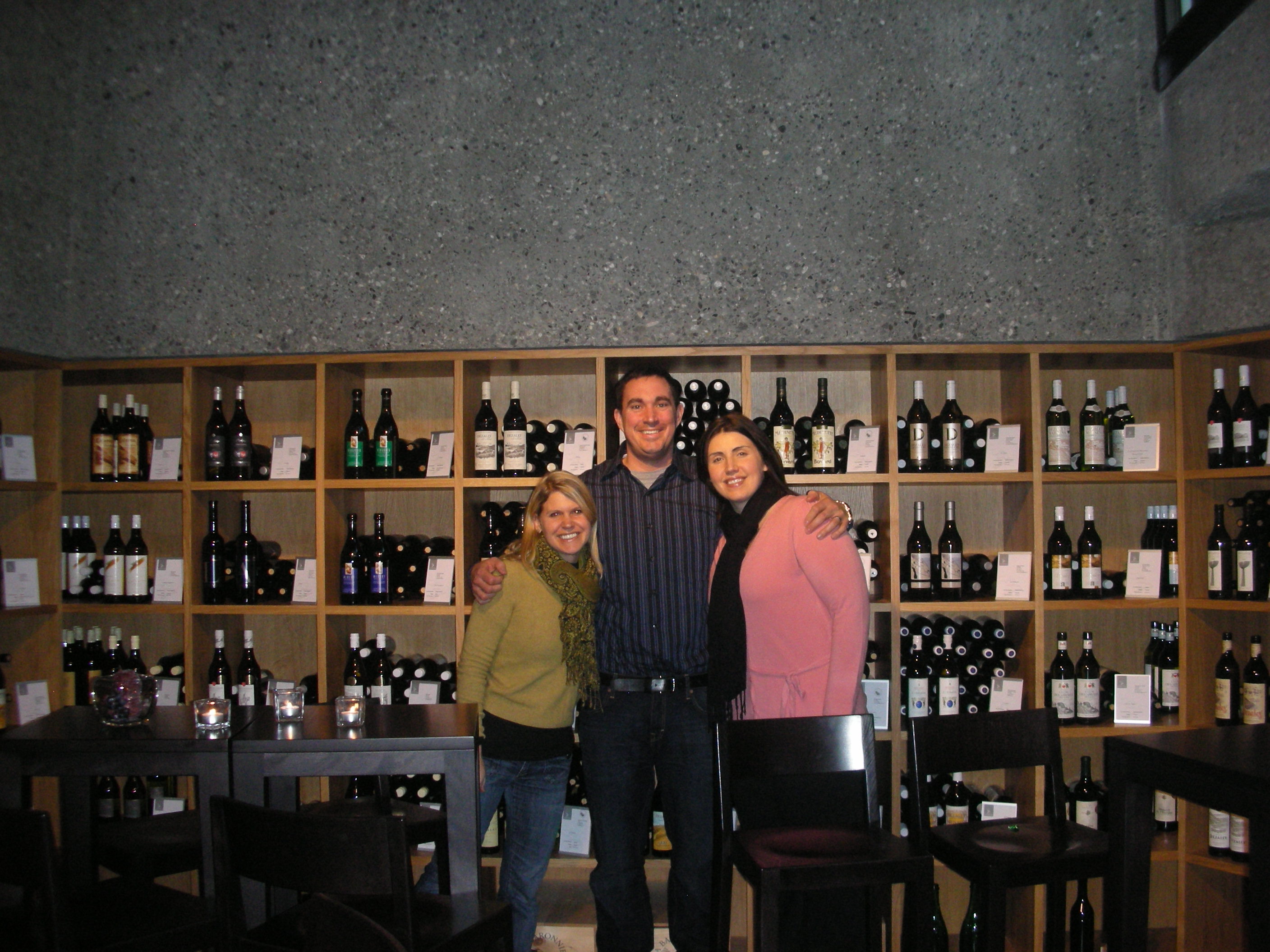
This past weekend was our favorite day of the year in Geneva:  Caves Ouvertes.   You may remember that we attended Caves Ouvertes our first Saturday in Geneva and it’s where we met A & A and D at the bus stop.  It’s crazy we’ve been hear a year and are having a second round of activities.

The reason its the best day in Geneva is that you pay 5 CHF for a wine glass and you can taste wine all day at any of the 90 open wineries in the canton.  This is hands-down Switzerland’s best deal.

A & A kicked off Caves Ouvertes 2012 with a scrumptious Canadienne Buffet at their house: American style.   We knew we’d need the hearty breakfast to fill our tummies before the big day.  They made eggs, bacon and biscuits & gravy.  L brought hash browns.   We brought Duncan Hines blueberry muffins (thanks Mama Mia for bringing us the mix from the US!).

The hosts with the delicious spread

My plate of yummy brunch

After brunch, we headed to Rive to catch the bus up to Vesenaz where the special Caves Ouvertes bus would pick us up.

Reminiscing our meeting one year ago.   D moved back to the US  in August and we have missed her.  Notice that A made a new “D on a stick” and she accompanied us this year in spirit.

As we waited for the bus, it started to rain.  Boo.  But it wasn’t going to stop us from enjoying a day of free wine.

Storms on the Swiss countryside

We tried to go to Cave de la Chena again as it was so cute and quaint.  However, they didn’t open until 1pm this year.   Luckily, it was at the location where the bus looped back around 5 minutes later.

We re-boarded the bus and headed to the next stop, Domaine Château-L’Evêque.   It is a organic winery and we really enjoyed a number of their wines.

Approaching Domaine Château-L’Evêque – home of bio wine.

Spirits were high at our first stop

We enjoyed a lot of their wines.  We noted we wanted to buy 7-8 bottles.  However, there were a delivery fee up until 24 bottles.  We decided to come back on another day to purchase as it wasn’t going to be fun to tote that many bottles on the bus.

After an hour, we decided it was time to move on.  We hopped on the bus and traveled to Jussy.

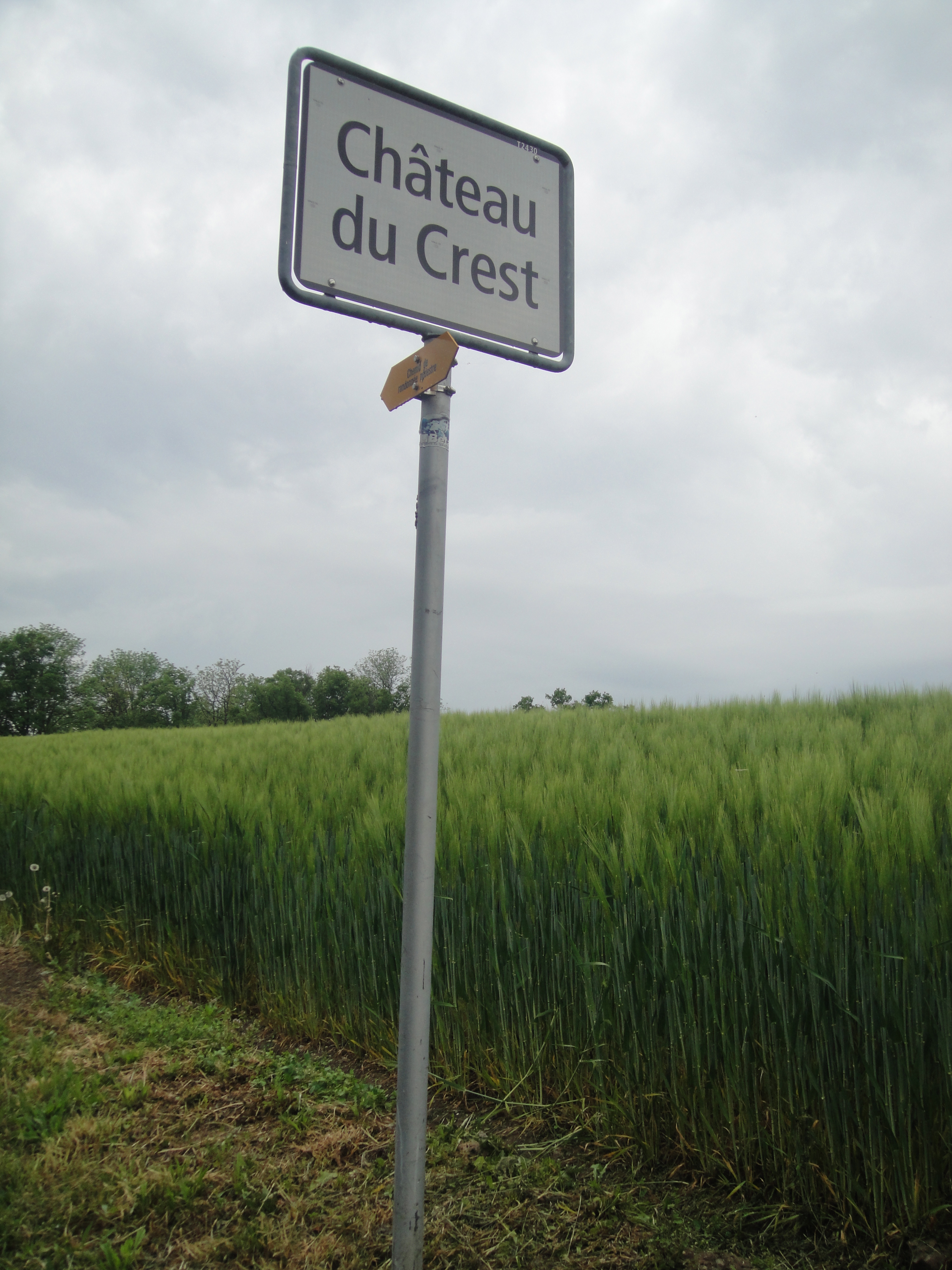
2nd stop: Château du Crest

Gorgeous castle turned winery

We really enjoyed this place last year.    New this year, Château du Crest had a game – you had to guess what type of wine was in each glass – blanc, rosé, or rouge.

The Wine Game

Gabe trying to guess

A got a few wrong.  Guess we’ll have to continue drinking to improve her wine skills. 

After trying out the game, we went for the wine tasting room.   We were encouraged to try their new wine, Surprise.

Gabe and A intrigued by the sales pitch

Château du Crest had almost 20 wines to try.  We think this would also be a nice place to come with guests.  Their website says they are open 5-7 on weekdays and 10-12 Saturdays.

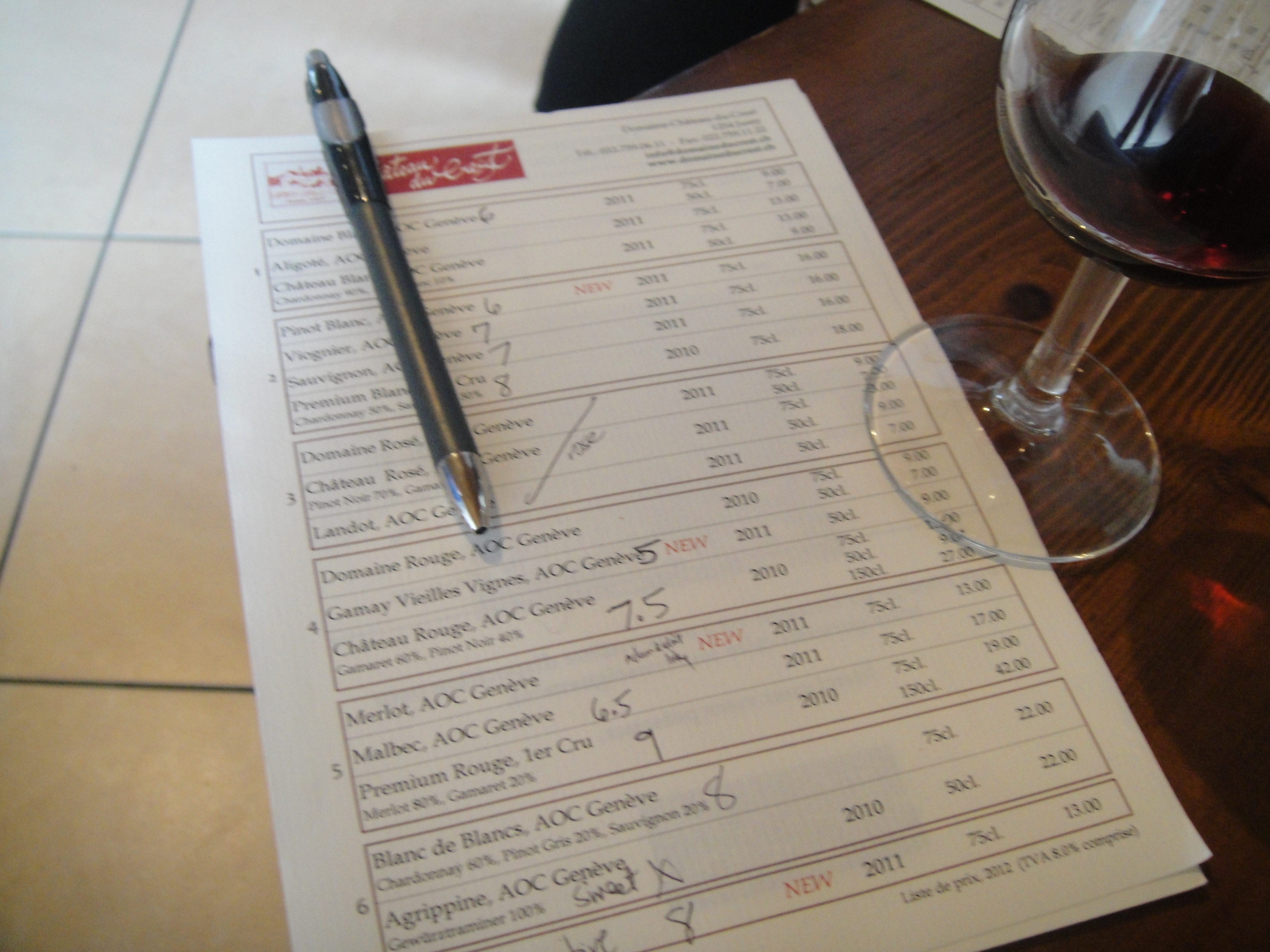
My rating sheet

After we left, we took time to pause in the same field as last year, with D on a stick.

Missing D

We hopped back on the bus and headed to stop #3:  Domaine de la Tour.  It was a cute little winery and they gave us a free platter of cheese and meat.  So kind!  We each bought a bottle there in gratitude.

It was 1:30 so we decided it was time to head to a town that had multiple wineries before Caves Ouvertes ended at 4pm.

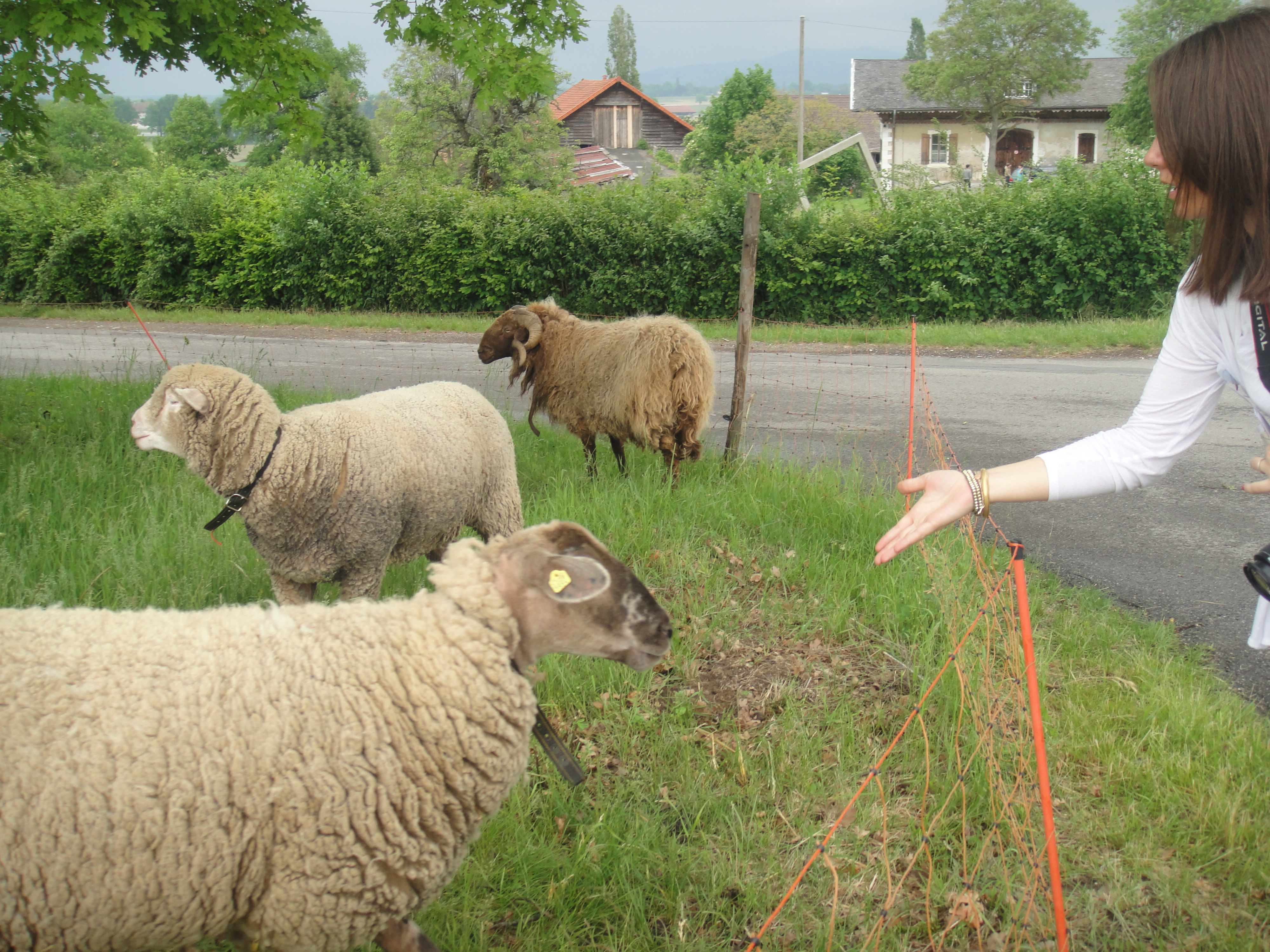
Only in Switzerland can you interact with local farm animals while waiting for the bus

L gave up her newly purchased bottle to the cause since we had a long wait.  This may or may not have been a mistake.

Only in Switzerland can you drink on the bus.

We rode twenty minutes to Anières.   Our first stop was lively, with a live band and a huge crowd.

Stop #4

At this place, they were serving raclette.    It smelled delish.  All five of us got our own plate.

Specialty of Switzerland: raclette

After a few tastes there, we stopped next door.

Enjoying Anières with its three wineries within steps of each other

Stop #5

At 4:45, we headed across the street to La Cote D’Or.   I only had one taste before I decided my feet couldn’t make it anymore.  They’d been standing maybe 2-3 hours on and off.

Stop #6

We trudged through the rain to the bus stop but missed the one we had intended to catch.  We huddled under the shelter and tried to keep warm waiting for the next.

When we arrived back in Geneva, I headed home to rest, elevate and ice the feet.  They’d had a big day.   Gabe headed out with the rest of the group to Old Town for a few drinks to continue the fun.

Another great Caves Ouvertes!

La Tour du Molard

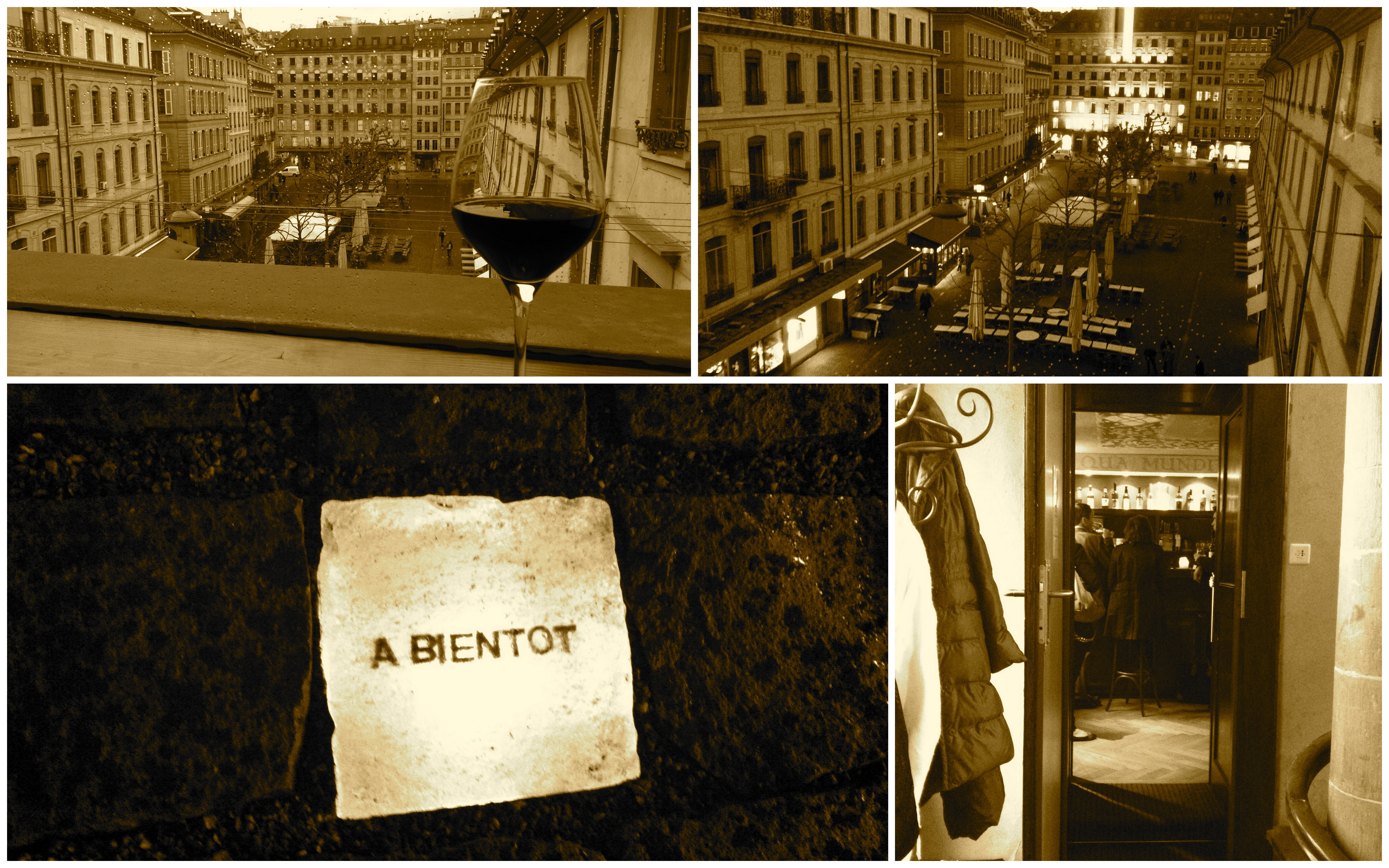
The Tower of Molard is a wine bar located in Place du Molard – literally located in the tower in the square.   I have been meaning to check it out, so E-dawg’s visit provided a perfect opportunity.

There are two main bar rooms, but there are small seating areas overlooking the plaza side and the lake side on each turn of the staircase.      Thus, you can either be sociable by gathering in a bar room, or more intimate by finding a quiet overlook above.

We arrived around 8pm and it was quite lovely to watch the sun set and the pavers light up in Molard square.    We enjoyed a regional Gamay and a Pinot Noir  (they only serve local wines) while catching up on old times.

E-dawg in Molard square at twilight. We took our time walking to the bus so we could read the different languages expressed on the lit-up pavers.   You can see the patrons of the wine bar silhouetted in the windows. 

We’d recommend this place for a cocktail – especially on a rainy evening like the one we had.  It provided a lovely backdrop of the city while we could remain warm & dry.

Fondue at Bains des Paquis

I am excited that E-dawg arrived safely to Geneva this past Sunday.   It is great to have her here!

When I woke up to downpours on her arrival day, it didn’t look good.  Rain, rain and more rain.   Two hail storms later, I greeted her at the airport.  However, low and behold……the sun came out during our bus ride home.  Thank you, Geneva!

After her quick shower and unpacking (remember, I don’t let jet lagged people sleep!), we headed out of the house to try to take advantage of the break in the grey skies.

We took the little yellow boat / muette over to the Paquis to go to Bain des Paquis for an early dinner of fondue.  Unfortunately, we arrived at 5pm and they didn’t serve fondue until 6pm.   Fail.  Poor E-Dawg was starving!     We occupied ourselves taking photos and with an appetizer of viande sechée (dried meat) while watching people skip stones and ducks socialize, until it was time.

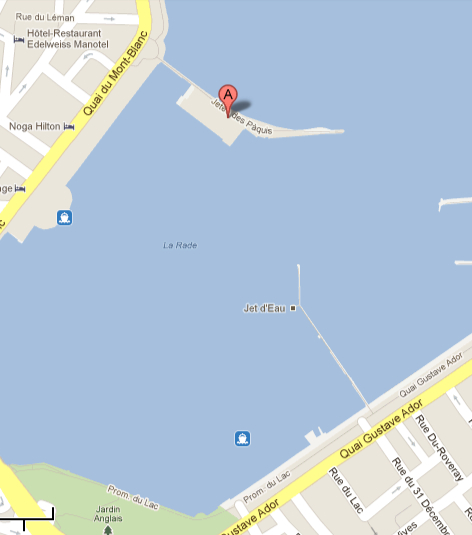
Bain des Paquis is very different from your traditional Swiss fondue restaurant.   It is located on an island jetting off of The Paquis neighborhood on the right bank.

Image courtesy of Google Maps

Difference # 1 – it is right next to the turkish baths.  You are in sight of people in their towels relaxing in the cooling air.    This could turn people off from eating fondue.  Non-adventerous people that is!!!

Difference # 2 – You order at the counter and then they either give you your order immediately, or they bring it to you.  In the case of fondue, they bring it to you.

Difference # 3 – They serve fondue au crémant – it is made with sparkling wine and is lighter and creamier than other types.  Mmmmm.

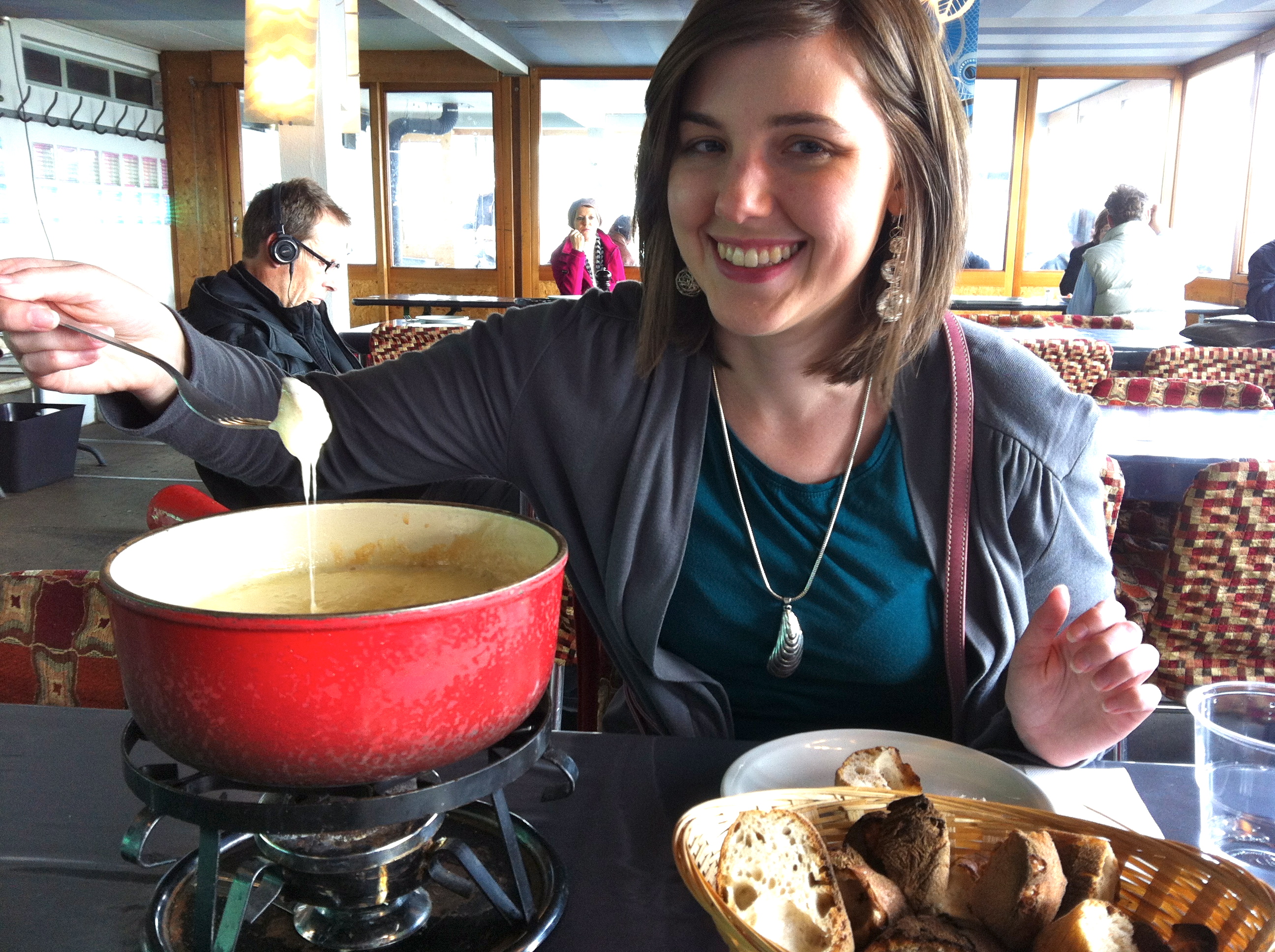
Difference # 4- You also have the ability to order as many servings as you want no matter how big your party is.  Why is this important, you ask?   Well, the average US visitor cannot eat their fair share of fondue.  Thus, it makes it more appealing for the stomach and the wallet to share a pot of the cheesy stuff.  Who wants to waste half a vat of cheese and pay overpriced Swiss francs for it?  So,  in the case of E-dawg and I, we shared a portion for one (22 CHF).  And it was perfect.  We even reached the toasty cheese-it bottom that is very elusive.

E-dawg enjoying the creamy treat made with cheese and sparkling wine

Yummy cheese-it bottom!

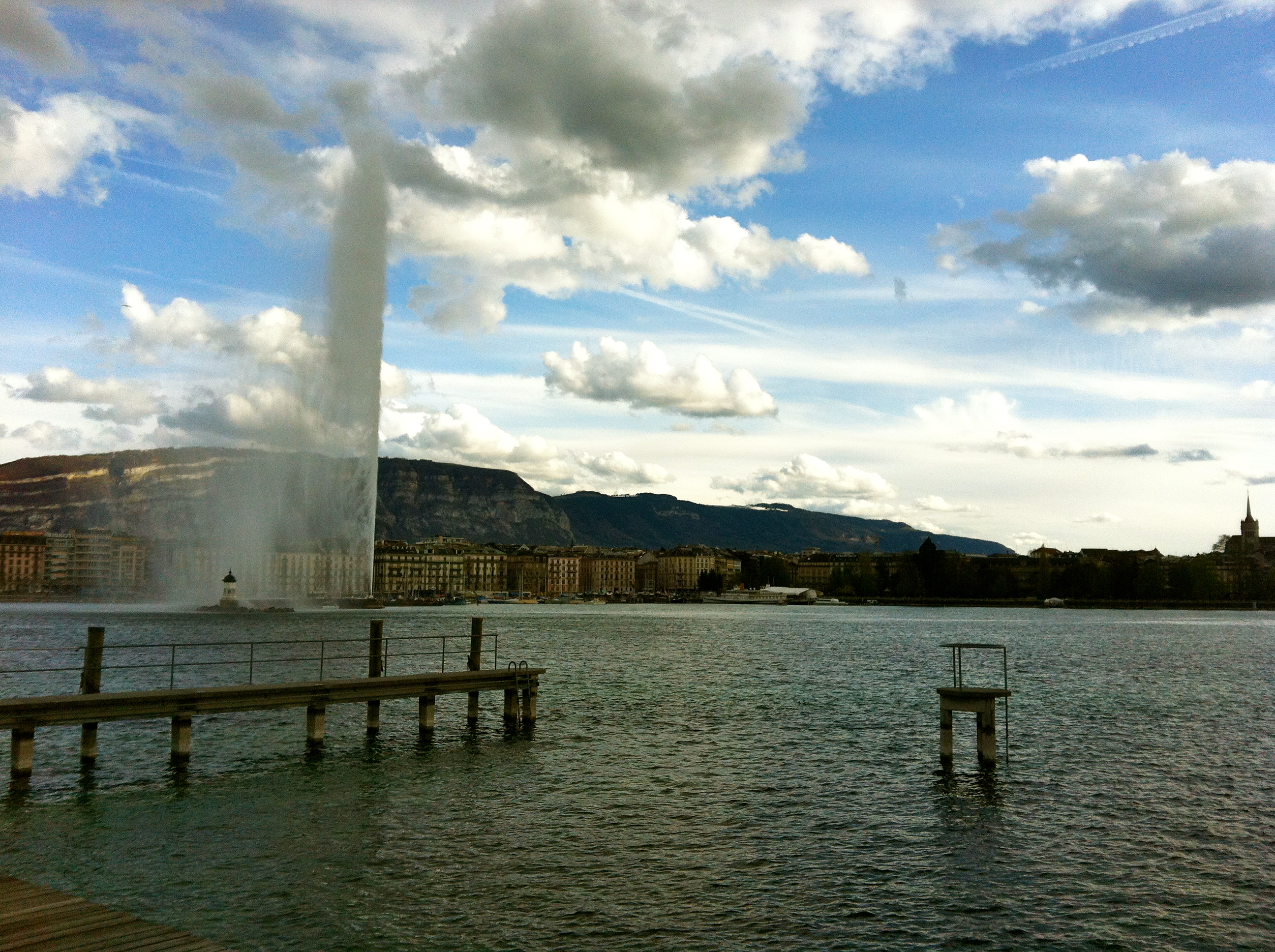
The view is incredible.  These shots were taken just steps away from where we ate.

View of the Jet d'Eau from Bains des Paquis

Bains des Paquis is also a nice place to relax

Unfortunately, the Bains des Paquis stops serving fondue at the end of April.  So hurry there before the time is up!  Or else, you’ll just have to wait for Fall…..

Related articles:
The Swiss Watch Blog – Famous Swiss Foods:  Cheese
Schwingen in Switzerland – Expat 101 – Lesson 3 – The Best Fondue in Geneva
Saveur – Fondue au Crémant 

Springtime ride on the Glacier Express

Post by Lauren

You may recall from the blog we took the Glacier Express to St. Moritz this winter.   When we took it while Gabe’s family was here, it was equally as beautiful only half covered in snow.

This time, instead of St. Moritz, we headed to winter sports capital, Davos.  We passed through in route to Klosters, which was the choice vacation getaway for Princess Di and family.  You see, I figured I’d class up the selection and provide us the lodging of royalty.  Just kidding, it was the only hotel in the entire region left since it was still ski season.  And I can promise you that they didn’t stay in the Swiss Sport Lodge, although it was fine for our tastes 🙂

You can see a pictorial recap of our journey below:

Starting out in Zermatt and heading to Brig. Not much snow at all this time!  We love watching the wonder on everyone’s faces!

Continuing on through Fiesch, Reckingen, Muster, Fulka and the canton of Ori.
Everyone in awe in Andermatt. It’s my favorite on the ride, too!

Cutting through the Rhine Gorge, passing through Davos and reaching our destination of Klosters.

Enjoying their first Swiss fondue and raclette in Klosters. Since the raclette was Type 2 and served without meat, the group favorite was the mushroom fondue. We were the only ones in the restaurant with an exclusively German-speaking owner.   It was a really awkward fun experience!

We stayed at the Swiss Sport hotel in Klosters. We found Klosters to be small and tranquil – not a place for late night action.  We had to create our own!  The evening was fun of laughter and fun.  Don’t let The French Cougar tell you that is water in her hand – we believe its wine!   Also don’t even ask why Dunkel and Sweet Wine have those amused looks on their faces.  What happens in Klosters stays in Klosters!

A bonus is that The Gladiator and Mama Mia celebrated their wedding anniversary on this stint of the trip.   We are so glad we got to spend it with them!

Famous Swiss Foods: Cheese

Post by Lauren

Switzerland is famous for its cheese delicacies. I thought I would dive into this topic a bit more.

Why is cheese from Switzerland better?

Many say it’s the cows. Switzerland has a lot of grassland which is hilly and unfit for traditional farming. However, it is excellent for livestock breeding. On a recent tour of the Gruyeres cheese factory, they say that you can taste the flavor of the meadows in the cheese, just like you can tastes the hint of cherry, blackberry, and oak in wine.

The secret to Switzerland's cheese.

Which cheese is Swiss cheese?

Well, The Swiss will argue that all cheese in Switzerland is Swiss cheese, because it is made in Switzerland. They aren’t really familiar with the Americanized “Swiss cheese” with holes in it. But this type of cheese Americans commonly know as Swiss is in fact a general term for what the Swiss call Emmenthaler. However, in Switzerland, they have over 450 types, all which they consider Swiss cheese.

Check out this link for an interview with Matt Lauer inquiring about this same topic

http://today.msnbc.msn.com/id/26184891/vp/45240274#45240274

Where in Switzerland is known for good cheese?

Everywhere!!  See this map for specific types.

How much cheese do Swiss people eat a year?

47 pounds, compared to 31 pounds by Americans.

How do you eat cheese in Switzerland?

Fondue

Fondue is a special mélange of Swiss cheese ( Jarlsberg, Emmenthaler, and Gruyere ) mixed with liquors (wine and kirsch). You heat it in a fondue pot and you dip stale bread into it. The Swiss are not known for any fondue except for this type. So not oil fondue (bourgignonne) or broth fondue (chinoise) or chocolate fondue (like the kind you see at weddings).

This type of fondue is rare in Switzerland

However, they do add some variety by serving champagne fondue, and tomato fondue.

The first time we ordered fondue, we only ate a tenth. We were so stuffed. The waiter thought something was wrong as I think we ate less than anyone else ever had.

Nostalgia. Our first fondue experience in Switzerland at Café du Soleil.

We have never reached the bottom by ourselves. However, the bottom is the best part. A told us its like a crispy cheese-it. When we went snowshoeing the gals who sat next to us polished theirs off and offered us some of the bottom. Oh so good.

Also, it should be told that true Swiss folks dip their bread into a shot of kirsch first. It is like a cherry alcohol. On the same snowshoeing outing, one of the mean offered us his glass of kirsch to experiment. Not sure if I was a huge fan, but it was very kind for this gentleman to teach how the true Swiss do it.

Fondue comes along with responsibility. You should take care that your fork never touches the melty cheese, only your bread. Also, you should avoid your mouth making contact with your fork.

Raclette

This is our favorite cheese dish. In a traditional setting, a huge block of cheese, is heated under a heating element. When it starts bubbling, you scrape off the melty layer onto your plate and eat it with accompaniments which can be dried meats, breads, potatoes, pearl onions, or pickles.

Double dose of fondue and raclette. This is raclette Type 1 - Form A - wedge.

Me, mesmerized by eating the raclette. This is type 1 - form B - horizontal block of cheese.

Pascal learning how to do the scrape.

It can also be served two other ways that we have seen. The second way [Type 2]  is still a traditional method, but is easier for parties at your home. On a tiered platform, you have a central heating plate. Underneath, you slip individual (usually 6) dishes on which each person has ensembled their own concoction – slice of raclette, perhaps some dried meat. Then, afterwards, they scrape their individual serving onto bread or potatoes on their plate.

The Captain and Swiss Miss eating Raclette - Form 2. Notice the little dishes underneath. The top is keeping our potatoes and bread warm.

Finally, some restaurants just do the prep in the back and bring you a melty plate of gooey raclette. The taste is the same, but it lacks the fun. Make sure you ask the preparation if you really want a traditional setting.

What if you just want to buy it at the store?

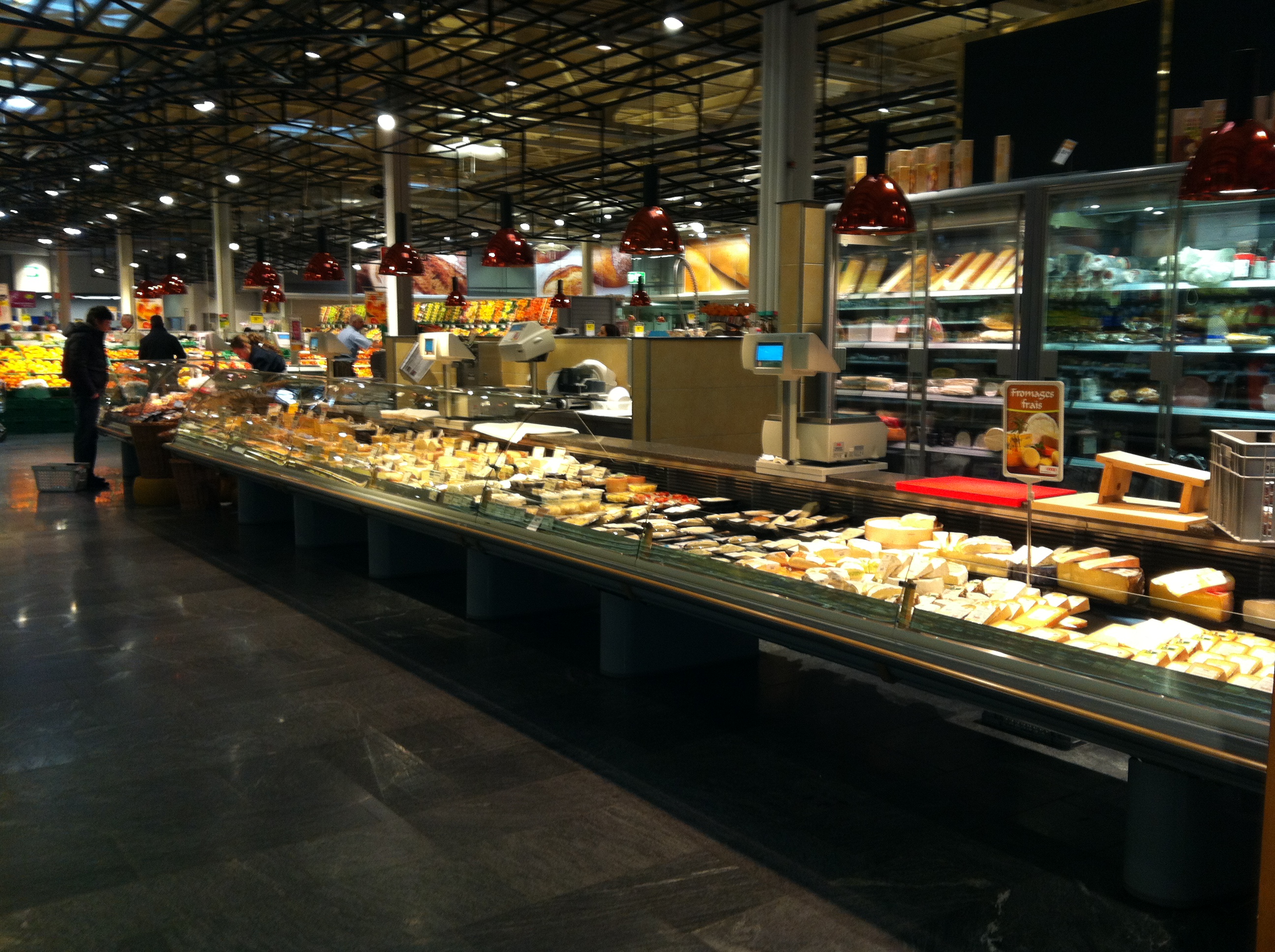
At the grocery store, the cheese section is at least double the size of frozen foods. These people take their cheese seriously. The only other nationality that comes close to Switzerland in the realm of cheese is France. I like French cheese too. Gabe doesn’t because he isn’t a fan of the soft types.
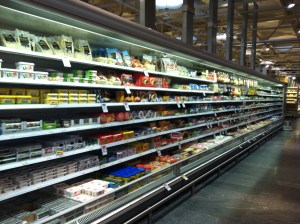
"Regular" cheese aisle at the grocery store near Gabe's office

"Specialty" cheese section at the grocery store near Gabe's office. Same store.

However, in either of these photos, you will not find any cheddar or orange cheese.  Nada.

You can also buy cheese at the farmers market, or at full-out cheese stores that only sell cheese.  I am intimidated still by these places. I’ll buy an occasional known type at the farmers market but want to practice my French a bit more before venturing to the unknown.

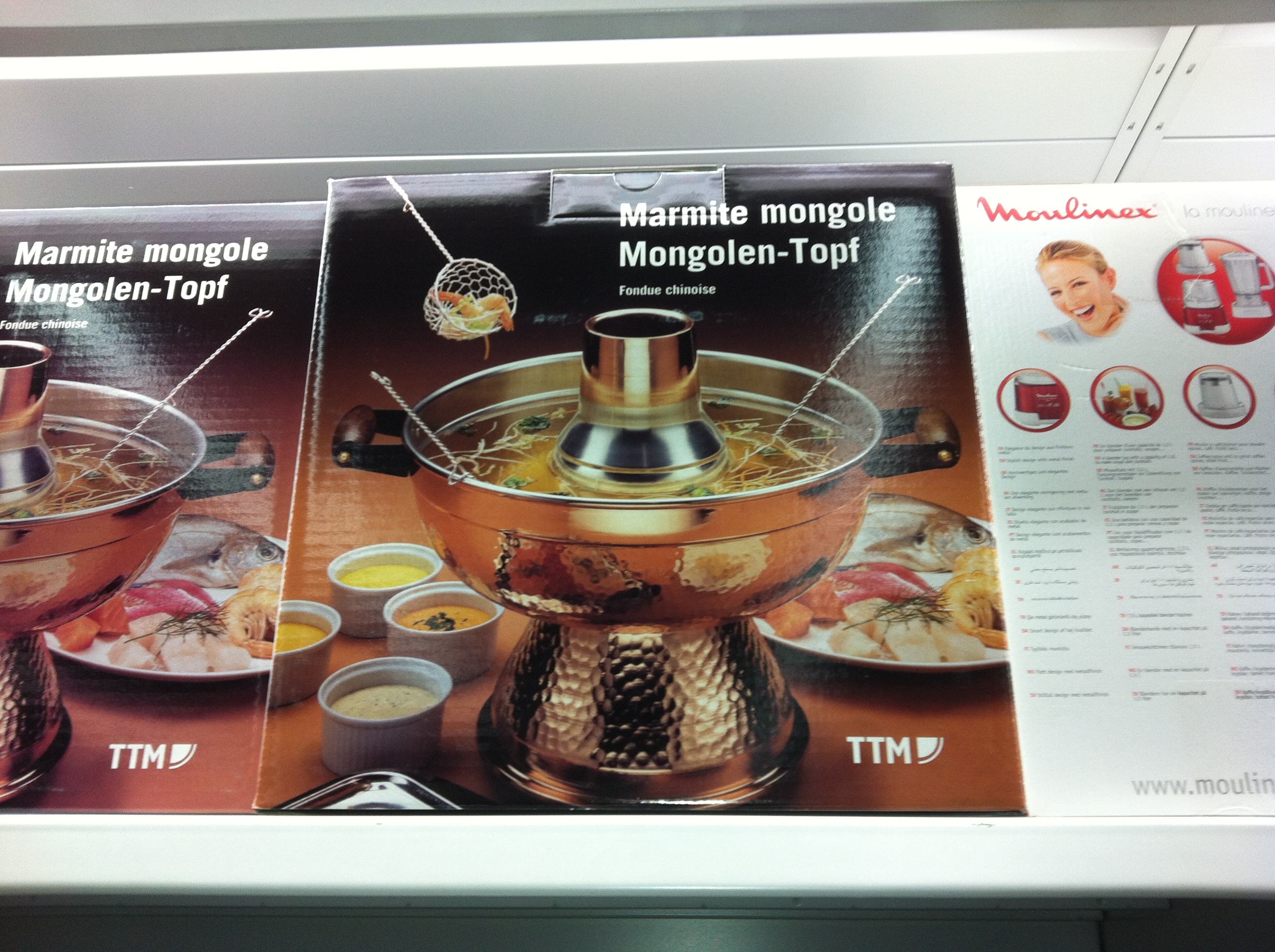
If you want to make fondue or raclette at home, no worries – they sell plenty of cheese heating instruments here.

Cheese prep aisle at local electronics store

The Röstigraben

Post by Lauren

Switzerland has many different divides based on its mountainous geography. Since many of the areas stayed remote for a long time, it prevented the ease of travel and communication. Thus, there wasn’t really ever a “melting pot” effect in transitioning into one Swiss culture. Still today, there are still four official languages, based on the geography.

A few months ago, we looked at this language divide. This divide can sometimes be expressed as the “Röstigraben” (rosti divide in German) or in “rideau de rösti” (curtain of rosti in French). While the divide is named for a culinary dish ( based on the farmers breakfast rösti which originated near Bern ), it is actually more commonly used to reference the attitudinal differences that exist on either side of the divide.

The Swiss Germans have political differences to their Swiss Romande neighbors. It includes voting (Swiss Germans don’t want to be a part of the European Union, and want to keep the franc vs. adopting the Euro) as well as general lifestyle differences (Swiss Romandes are less conservative, less strict on rules, etc). During the elections, you can see a lot of this exemplified in the political ads.

And what is Rosti anyhow, you might ask? It is a potato dish. The best way to describe it is like upscale Waffle House hash browns. Sometimes it is served as a side, but most times, times its a main course – usually smothered, covered with something yummy – cheese, mushrooms, an egg, or perhaps sausage. It’s simply delicious.

Rosti at Restaurant du Pont, Zermatt, Switzerland

Other countries have similar divides reflected in foods.

In Germany, they have a line called the Weisswurstäquator. It is known as the “white sausage equator” because the Bavarian region eats the white type, rarely consumed by those living in the Northern region.

In Italy, the pizza is better in Naples and Southern Italy. Why? Because the Southern part of Italy was notoriously more poor than the Northern part. Thus, they often scraped up simple inexpensive ingredients to make a meal….thus creating and perfecting the dish we know as pizza.

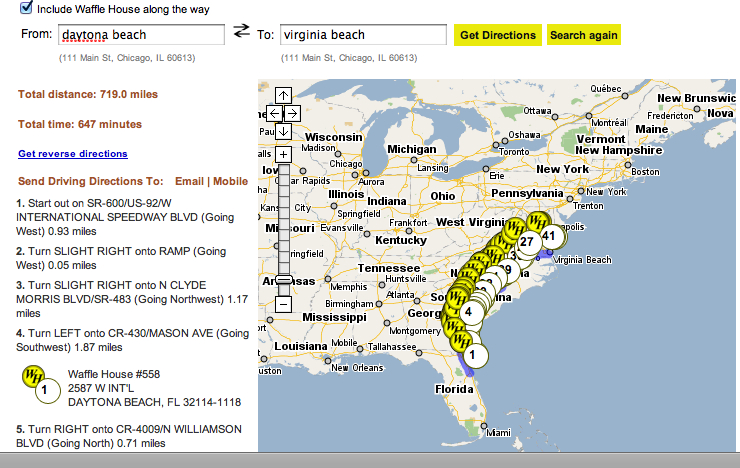
And, back in the United States, I believe we have our own version of a Röstigraben, if you count the succulent Waffle House hashbrowns as a national delicacy. There are far more WH’s in the South than in the North and the West.

I wonder if our forefathers brought this back from Switzerland?

Courtesy of Waffle House restaurants

What other places in the world have divides based on food?

Lavaux Wine Tasting

Post by Lauren

The Lavaux wine region is definitely a place you should see in your lifetime. On our first trip to Switzerland we took a day trip to Montreux, and I remember driving through this area with my mouth wide open in awe.


This particular time was in the winter, but is truly beautiful any time of year. See the Schwingen in Switzerland blog for a recount on spending a summer day in Lavaux. I had the pleasure of hiking* in the Fall as well and it was gorgeous:


When The Captain and Swiss Miss were here, they had wanted to hike in Lavaux; however, the Geneva record low temperatures prevented us from doing so. Nonetheless, we still took the train from Geneva to Rivaz to check out the wine cellar, Vinorama.

Vinorama is cut into the side of the Lavaux countryside. It offers “dégustations” (tastings in French) of different Lavaux varieties. It also has a wine store offering hundreds of Lavaux bottles .
Vinorama


During our visit, they showed us a short film about the region’s wine production. It was incredibly well done, depicting the ups and downs of a local farmer throughout the year. This helped to bring personality to this special region and to understand how hard it is to farm the land.

The primary reason Lavaux is special are its terraces. They are steep, staggered, and require a lot of maneuvering on the part of the wine workers. I have seen similar ones in Cinque Terre in Italy, but no where else in the world have I seen anything like it. It takes incredibly hard work to farm that land – both in the upkeep on a slanted slope and transportation of the grapes in the harvest. And they have been doing it since the 11th Century.

The film explained that it is the terrace that affects the taste of the wine. The heat from its walls warms the earth underneath the vines. This as well as the sun’s reflection off of Lake Geneva bodes well for the grapes.

Vinorama offers tastings in white, red and combinations. The tasting that we did included the following:

Epesses – La braise d’enfer
Vilette – Clos du roches
Domaine Moulin la Vignette Lutry
Lettres des Noblesse (malbec/cab) st saphorin
Epesses plant robez blaise duboux

My favorite was hands down the Lettres des Noblesse. However at 40 CHF per bottle, it didn’t make it into our cellar on that particular day.

A few days after our trip, my French tutor and I were discussing the Lavaux region. She is French and advised that of course, any agriculture product in Switzerland is very expensive. I totally agree with that statement. The terraced type of farming and harder labor can’t lend to an economical product. However, with the magic that can be found here in Lavaux, I’d also say that their wine is certainly worth it.


*For hiking: we got off the train at St. Saphorin and walked to the Lutry station. It was four hours and we had magnificent views every step of the way. This of course could be shortened or you could do the wine stop as we did.